
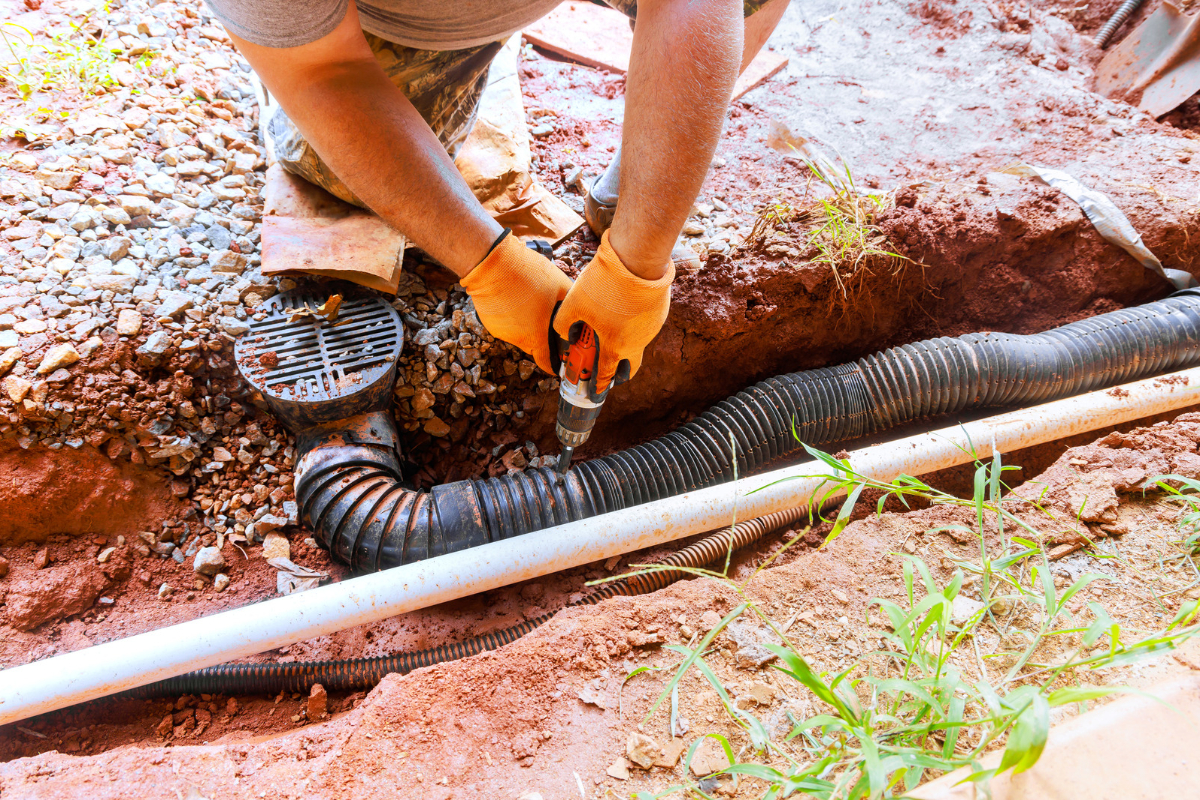
Explore yard drainage and French drain installation costs, financing options and how to choose a fix for recurring water problems.
Page last reviewed: October 29, 2026 · By the Home Repair Financing editorial team
Standing water, a soggy lawn or puddles against the house usually mean rain has nowhere to go. Yard drainage fixes range from cheap downspout extensions to French drains and regrading that cost several thousand dollars, and most homeowners pay with savings or use yard drainage financing, such as a credit card, a landscaper's payment plan or a personal loan for bigger jobs.
This guide explains which fix matches which problem, what each one costs, why drainage matters for your foundation and what to check before you borrow. It also shows what a drainage loan would cost each month.
Key Takeaways
You can finance yard drainage work with a personal loan, a payment plan from your landscaper or drainage contractor, a credit card or, for large projects, a home equity loan or line of credit. Drainage work is rarely an emergency, so you usually have time to compare quotes and offers.
| Option | Good fit when | Watch out for |
|---|---|---|
| Unsecured personal loan | You're installing a French drain or regrading and want a fixed payment | Rates and approval depend on the lender and your credit. An origination fee may be taken out of the loan, so you receive less than you borrow. |
| Contractor payment plan | Your landscaper offers a true 0% or low-rate plan you can pay off on time | Some promos use deferred interest, which can charge interest back to the start if you miss the payoff deadline. |
| 0% intro APR credit card | The fix is small, like downspout extensions or a short drain | Any balance left after the intro period is charged the card's regular rate. |
| Home equity loan or home equity line of credit (HELOC) | Drainage is part of a larger landscaping or foundation project | Your home is collateral, and closing costs can eat into the savings on a smaller job. |
Because drainage can usually wait a few weeks, you can save part of the cost or do the cheapest fixes first and borrow only for what's left. Our guide to contractor financing vs. a personal loan explains what to compare when a contractor offers a payment plan.
The right fix depends on where the water comes from and where it collects. A contractor or landscaper should watch how water moves during a heavy rain, or look at the low spots and the slope around your house, before recommending anything.
| Problem | Common fix | How it works |
|---|---|---|
| Puddles near the house after rain | Downspout extensions or buried downspout drains | Carries roof water away from the foundation |
| Ground slopes toward the house | Regrading | Adds or removes soil so the yard slopes away from the foundation |
| Soggy lawn or low spot that stays wet | French drain (a gravel-filled trench with a perforated pipe) | Collects water underground and carries it to a better spot |
| Water running downhill from a neighbor or slope | Curtain drain or swale (a shallow, sloped channel) | Catches water before it reaches the house and redirects it |
| Nowhere to send the water | Dry well | Holds runoff underground and lets it soak into the soil over the following hours and days |
Sources: Bob Vila and the Department of Energy's Building America Solution Center. Many yards need more than one fix.
Try the cheap fixes first. Clean gutters and make sure downspouts aren't dumping water at the base of the wall. The Department of Energy's guidance says downspouts should end at least 5 feet from the foundation, or drain to an underground system at least 10 feet away. If that solves the puddles, you may not need to borrow at all.
Costs depend on the fix, how many feet of drain you need, your soil and how much of the lawn or landscaping has to be dug up and restored. Here's what common yard drainage fixes cost.
| Fix | Typical cost |
|---|---|
| Dry well | $50 to $3,000 or more, depending on whether it's a gravel pit, plastic tank or concrete tank |
| Regrading the yard | $500 to $5,000 |
| Surface-level yard drain | $10 to $30 per linear foot |
| French drain in the yard | $10 to $35 per linear foot |
| Curtain drain | $10 to $35 per linear foot |
| Deep drain along the foundation | $30 to $90 per linear foot |
Source: HomeGuide national estimates. Rocky or clay soil, tight access and landscape repair can raise the price.
For a full French drain project, Bob Vila puts the national average at about $5,000, with permits, where required, around $50 to $100. Bob Vila also says a properly installed French drain should last at least 30 to 40 years, which matters if you're choosing a loan term.
Ask whether the quote includes restoring the lawn, plantings and any paths the trench crosses. HomeGuide notes that landscapers often charge $50 to $100 an hour for a two-person crew doing lawn repairs, so cleanup can add up.
When the ground slopes toward your house, water collects against the foundation and can get into the basement or crawl space, the Department of Energy's Building America Solution Center explains. Materials that stay damp or soaked will eventually fail. In cold climates, meltwater can freeze into a ridge of ice that sends even more water back toward the house.
The fix is a slope that carries water away. The guidance calls for the ground to drop at least half an inch per foot for at least 10 feet from the house, about 5 inches over that distance. Hard surfaces like patios and driveways should also slope away, or have drains. Where there isn't 10 feet of space, a swale or drain can carry water away instead.
Fixing drainage early is usually cheaper than fixing what it damages. If you already see cracks, sticking doors or water in the basement, have the foundation checked as well. Our foundation repair financing guide covers inspections, repair costs and insurance.
Sometimes. Small fixes like downspout extensions rarely need one, but trenching, regrading, dry wells and drains that tie into a storm sewer may. Rules vary by town, so check with your local building or public works department before work starts.
Where the water ends up matters. Some towns limit sending drainage onto a neighbor's property, into the street or into the sanitary sewer. Ask your contractor where the drain will discharge and whether that's allowed. Before anyone digs, call 811 so buried utility lines can be marked.
If water is coming onto your property from a neighbor's yard, talk with them first. Your town may also be able to tell you whether the runoff breaks local rules.
Your monthly payment depends on how much you borrow, your APR and how long you take to repay. The examples below show estimated payments for common drainage projects at three example APRs.
| Loan amount (5-year term) | At 12% APR | At 20% APR | At 28% APR |
|---|---|---|---|
| $3,000 | $67/mo, $1,004 interest | $79/mo, $1,769 interest | $93/mo, $2,604 interest |
| $5,000 | $111/mo, $1,673 interest | $132/mo, $2,948 interest | $156/mo, $4,341 interest |
| $10,000 | $222/mo, $3,347 interest | $265/mo, $5,896 interest | $311/mo, $8,681 interest |
These are example APRs to show how your rate changes the cost, not current offers. Personal loan APRs vary widely by lender and credit. Examples assume a fixed rate and no fees, rounded to the nearest dollar, and an origination fee would raise your actual cost.
On a smaller job, a shorter term means less interest. Our $5,000 home improvement loan page shows costs for a budget in this range.
Use the calculator below to estimate your monthly payment and total interest. Enter the amount you plan to borrow, an estimated APR and a repayment term. Your actual loan offer may include different rates or fees.
Your Estimate
Monthly Payment
This calculator gives estimates only. It isn't a loan offer or a promise to lend. Your actual APR, loan amount and terms depend on the lender's review of your credit and income, and limits vary by state. The slider ranges are for estimating and don't reflect what lenders offer.
Powered by: Home Repair Financing
Grants for yard drainage alone are rare, but you can often shrink the bill or spread it out. Since most drainage work isn't urgent, staging it can keep you from borrowing more than you need.
Our guides to home repair grants and home repair loans for seniors list more programs.
Watch for "Guaranteed Approval"
Legitimate lenders won't promise or guarantee you a loan before you apply, the FTC warns, and no real lender will say that paying a fee guarantees you'll get one. If someone wants a fee up front before granting the loan, walk away. Learn more about how to spot home repair scams.
Related Resources
It ranges from a small amount for downspout extensions to several thousand dollars for a French drain or regrading. Drains are usually priced by the foot, so length matters most. Soil, access and lawn repair also affect the price.
Yes. A personal loan, a contractor payment plan or a 0% intro APR card can all work, depending on the size of the job. Approval and rates depend on the lender and your credit.
There's no single minimum. Each lender sets its own requirements, and many personal loan lenders look for a score of about 580 or higher, according to Bankrate. A higher score usually means a lower rate.
It can be if water keeps collecting in the yard or against the house and simpler fixes haven't worked. A well-built French drain can last decades. Try downspout and grading fixes first, since they cost less.
A properly installed French drain can last 30 to 40 years or more. Poor installation can shorten that. Ask the installer what upkeep the drain needs and what the warranty covers.
Yes. Water that collects against the house can soak the soil, get into the basement or crawl space and wear down building materials over time. Making sure the ground slopes away from the house helps prevent it.
Usually not. Insurance generally covers sudden damage from covered events, not drainage upgrades or damage that builds up over time. Check your policy if a sudden event caused the problem.
Start by talking with your neighbor. Your town can tell you whether local rules limit how runoff is directed, and a curtain drain or swale can help redirect water on your side. For serious disputes, a local attorney can explain your options.
Some homeowners do, but digging trenches is hard work and mistakes in slope can make the drain fail. Professional work usually comes with a warranty, while DIY work doesn't. Call 811 to mark utility lines before you dig.
We use cost guides, Department of Energy building guidance and federal sources to explain yard drainage costs and financing. Cost estimates are national averages and vary by soil, region and access. Our payment examples are estimates, not loan offers. Rates and local rules can change.
See what loan options may be available for your yard drainage project. It's free to submit a request, and you don't have to accept any offer. If you're matched, a participating lender may contact you directly and will set its own eligibility, rates, fees and funding time.
This page was written with the help of AI tools and reviewed and fact-checked by the Home Repair Financing editorial team.