
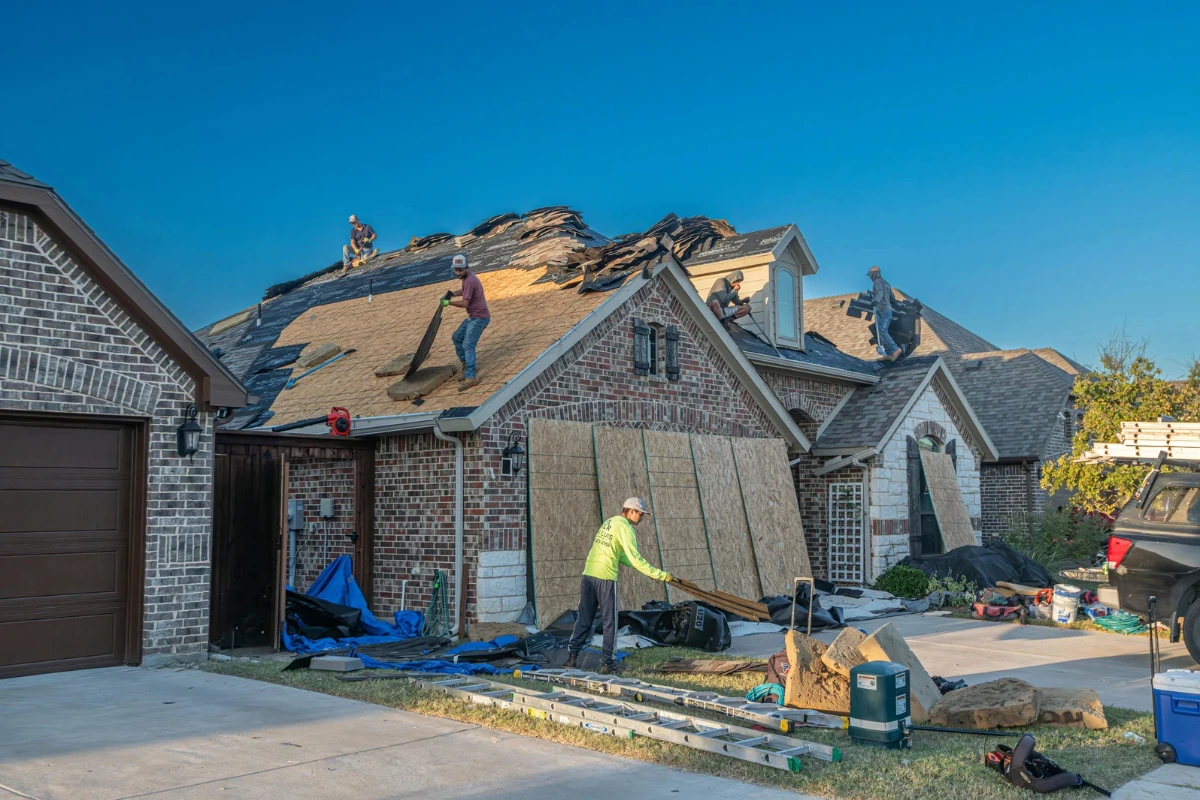
Discover how termite damage affects repair costs, what insurance may exclude and ways to pay for structural repairs and treatment.
Page last reviewed: October 29, 2026 · By the Home Repair Financing editorial team
Termites usually leave you with two bills: one to get rid of the colony and another to fix the wood they ate. You can pay for termite damage repair with savings, a personal loan, financing from your pest control company, a credit card or, for bigger structural jobs, a home equity loan. Homeowners insurance rarely helps, so it's worth knowing your options before the repair quote arrives.
This guide explains how treatment and repair costs differ, what common repairs cost, when insurance or a termite bond might pay and how to compare financing. It also covers what to do if you can't afford the work.
Key Takeaways
Most homeowners pay for termite damage repair with a personal loan, a payment plan from the pest control company or contractor, a credit card, or home equity. The best fit depends on the size of the bill, your credit and whether you're paying for treatment, repairs or both.
| Option | Good fit when | Watch out for |
|---|---|---|
| Unsecured personal loan | You want one fixed payment that covers treatment and carpentry from different companies | Rates and approval depend on the lender and your credit. An origination fee may be taken out of the loan, so you receive less than you borrow. |
| Pest control or contractor financing | The company offers a low or 0% APR plan you can pay off on time | Some promos use deferred interest, which can charge interest back to the start if you miss the payoff deadline. It usually covers only that company's work. |
| 0% intro APR credit card | The bill is small, like a treatment or a minor repair, and you can pay it off before the intro period ends | Any balance left after the intro period is charged the card's regular rate. |
| Home equity loan or home equity line of credit (HELOC) | Structural damage is extensive and you have equity in your home | Your home is collateral. HELOC rates are commonly variable, and closing can take longer than a personal loan. |
Some large pest control companies, such as Orkin, offer financing for termite services. That can help with the treatment bill, but the carpenter or contractor who fixes the wood is often a separate company with its own payment terms. A single personal loan can cover both. Before you accept a company's plan, see how contractor financing compares with a personal loan.
Treatment and repair are separate jobs. A licensed pest control company kills the colony and protects the house. A carpenter or general contractor then replaces or reinforces the damaged wood, so you may need estimates from both.
Order matters. Orkin advises waiting to repair until a licensed pest professional confirms the termites are gone. Repairing first risks more damage if the infestation isn't fully gone.
| Treatment type | Typical cost | How it works |
|---|---|---|
| Liquid soil treatment | $3 to $16 per linear foot | A termiticide (termite-killing chemical) applied to the soil around the foundation to form a barrier |
| Bait system | $8 to $12 per linear foot | Stations with slow-acting insecticide that termites carry back to the colony |
| Heat treatment | About $10 per linear foot | Heats the structure to kill termites inside the wood |
| Tent fumigation | About $1,200 to $2,500 or more | Covers the house with a tent and fills it with gas to reach termites inside the wood |
Source: Bob Vila and Angi national cost estimates. Linear feet usually means the distance around your home's foundation.
Bob Vila puts the average treatment bill at about $230 to $930. A soil-applied barrier is the most common treatment, according to the EPA, which also notes that firms offering termite services must be licensed by your state. Ask to see the license before you sign.
If the bill for both jobs is more than you can pay at once, you don't have to finance both the same way. A small treatment bill might go on a card you can pay off quickly, while a larger repair may fit a fixed-rate loan better.
Bob Vila puts the national average for termite damage repair at about $1,800, with most homeowners paying $600 to $3,000. The biggest factor is how far the damage goes. Surface damage to trim or flooring is a small job. Damage to the beams, joists or sill plate that hold up your house is not.
| Extent of damage | What it usually involves | Typical cost |
|---|---|---|
| Small | Replacing a few boards or support pieces | $250 to $1,000 |
| Medium | Walls, flooring and framing that doesn't carry the home's weight | $1,000 to $3,000 |
| Extensive | Load-bearing beams, walls and other structural parts | $3,000 to $6,000 or more |
Source: Bob Vila national cost estimates. Costs vary by region, home and how much hidden damage turns up once walls or floors are opened.
Some individual repairs can add up fast. These are the line items you're most likely to see on a quote.
| Repair or add-on | Typical cost |
|---|---|
| Drywall patch | $50 to $75 per hole |
| Sanding and repainting damaged areas | $4 to $8 per sq. ft. |
| Wood siding replacement | $50 to $75 per sq. ft. |
| Structural engineer visit | About $517 on average |
| Support beam replacement | $1,500 to $3,000 per beam |
Source: Bob Vila. Your repair may need only some of these.
A beam that's only mildly damaged can often be "sistered," which means bolting a new board alongside it instead of tearing it out. That usually costs less than full replacement. Ask whether sistering is an option before you agree to replace structural wood.
If the damage reaches your sill plate (the board that sits on top of the foundation) or you see sagging floors, have a structural engineer look before anyone starts work. An engineer works for you, not the contractor, and can tell you what actually needs replacing. If the engineer finds problems with the foundation itself, our foundation repair financing guide covers those costs.
Usually not. Insurers consider termite damage preventable, unlike a sudden event such as a fire or storm, and most homeowners policies specifically exclude termites and other infestations, NerdWallet explains.
There are narrow exceptions. NerdWallet notes that a fire may still be covered as an accidental fire, even if termites started it. A collapse caused by hidden termite damage may be covered if you can show the damage wasn't visible. But if there were warning signs and you didn't act, the claim will likely be denied.
A home warranty is unlikely to help either. Many home warranties specifically exclude termites, according to Bob Vila. Read your plan before you count on it.
Bought the Home Recently?
If termite damage turns up soon after closing, look at your seller's disclosure and any termite inspection from the sale. Sellers are generally expected to disclose known termite damage, but the rules depend on your state. A real estate attorney can tell you whether you have a claim.
A termite bond is a service agreement with a pest control company, often renewed every year for a fee. It's the closest thing to insurance for termites, but coverage depends on which type you have. The North Carolina Department of Agriculture describes two main types.
| Bond type | What it covers | What it doesn't |
|---|---|---|
| Retreatment only | More treatment if termites come back during the agreement | Any damage the termites cause. This is the most common type. |
| Retreatment and repair | More treatment, plus repairs for new damage up to a set amount | Damage that existed before the agreement started, and anything beyond the dollar cap |
Source: NC Department of Agriculture and Consumer Services and University of Georgia Extension. Terms vary by company and state.
If you have a repair bond, call the company before you hire a carpenter. Claims usually require proof that the damage is new and often that live termites were found at the spot, UGA Extension explains. Photos help. Most companies can cancel the bond if you miss the renewal fee, so keep it paid.
Not every company offers repair coverage, and the home may need to meet certain conditions to qualify. If you're buying a bond after treatment, ask for the repair limit in writing, whether it transfers if you sell, and what the yearly renewal costs.
Your monthly payment depends on how much you borrow, your APR and how long you take to repay. Since most termite jobs cost less than $5,000, the examples below use a three-year term at three example APRs.
| Loan amount (3-year term) | At 12% APR | At 20% APR | At 28% APR |
|---|---|---|---|
| $2,000 | $66/mo, $391 interest | $74/mo, $676 interest | $83/mo, $978 interest |
| $4,000 | $133/mo, $783 interest | $149/mo, $1,352 interest | $165/mo, $1,956 interest |
| $6,000 | $199/mo, $1,174 interest | $223/mo, $2,027 interest | $248/mo, $2,935 interest |
These are example APRs to show how your rate changes the cost, not current offers. Personal loan APRs vary widely by lender and credit. Examples assume a fixed rate and no fees, rounded to the nearest dollar, and an origination fee would raise your actual cost.
Some lenders set minimum loan amounts, so a very small repair may be cheaper on a card or out of savings. For a typical termite budget, see our $3,000 home improvement loan guide. If your credit needs work, our guide to bad credit home repair loans explains your options.
Use the calculator below to estimate your monthly payment and total interest. Enter the amount you plan to borrow, an estimated APR and a repayment term. Your actual loan offer may include different rates or fees.
Your Estimate
Monthly Payment
This calculator gives estimates only. It isn't a loan offer or a promise to lend. Your actual APR, loan amount and terms depend on the lender's review of your credit and income, and limits vary by state. The slider ranges are for estimating and don't reflect what lenders offer.
Powered by: Home Repair Financing
If you can't afford the repair or can't qualify for a loan, look for help and ways to shrink the job before you borrow. Programs vary by area, and many have income limits or waiting lists.
Older homeowners can also check our guide to senior home repair loans for more programs. Many of these programs prioritize safety repairs, so ask about structural damage first.
Don't Let a Salesperson Rush You
Termites work slowly, and your house won't collapse overnight, Purdue Extension notes, so you have time to get several opinions. Be wary of anyone who pushes you to sign today or offers a discount for leftover chemicals. The exception is visible structural trouble, like sagging floors or a cracked beam. Have that checked right away and keep people off weak areas.
Watch for "Guaranteed Approval"
Legitimate lenders won't promise or guarantee you a loan before you apply, the FTC warns, and no real lender will say that paying a fee guarantees you'll get one. If someone wants a fee up front before granting the loan, walk away. Learn more about how to spot home repair scams.
Related Resources
It may be possible, but expect higher rates and fewer choices. Some lenders work with lower scores, and a cosigner or a smaller loan can help. Fixing structural damage first and leaving cosmetic work for later can also lower what you borrow.
Often, yes. Some pest control companies offer payment plans, and a personal loan or credit card can also cover treatment. A personal loan can pay for both treatment and repairs, even if different companies do the work.
Usually not. Many home warranties specifically exclude termites, so read your plan's exclusions before you count on it. A termite bond from a pest control company is more likely to help, and only if it includes repair coverage.
It can be, especially where termites are common. A retreatment-only bond pays for more treatment but not damage, while a repair bond also covers new damage up to a limit. Compare the yearly fee with the coverage you'd get.
In most cases, yes. Damaged wood can be replaced or reinforced, often by attaching a new board alongside a weakened one. Severe structural damage may need a structural engineer to design the repair.
Slowly. Termites usually take a long time to cause serious structural damage, so you typically have time to get several inspections and quotes. Don't ignore it, though, because damage keeps growing until the colony is treated.
It can be fine if the damage is minor and the termites have been treated. Ask for treatment records, any transferable bond and a structural evaluation if framing is involved. Use repair estimates to negotiate the price or request a credit.
You may be able to handle small cosmetic fixes, like patching drywall or replacing trim. Structural repairs to joists, beams or sill plates should be done by a qualified contractor, and they may need a permit.
There's no single minimum. Each lender sets its own requirements, and many personal loan lenders look for a score of about 580 or higher, according to Bankrate. A higher score usually means a lower rate.
There aren't many grants just for termites, but general home repair programs may help with unsafe structural damage. USDA repair grants are open to some very low-income homeowners 62 and older in rural areas. Local agencies and nonprofits may also help.
We use cost guides, extension and state agency guidance, and government sources to explain termite repair costs and financing. Cost estimates are national averages and vary by home and region. Our payment examples are estimates, not loan offers. Rates and program rules can change.
See what loan options may be available to repair termite damage in your home. It's free to submit a request, and you don't have to accept any offer. If you're matched, a participating lender may contact you directly and will set its own eligibility, rates, fees and funding time.
This page was written with the help of AI tools and reviewed and fact-checked by the Home Repair Financing editorial team.