
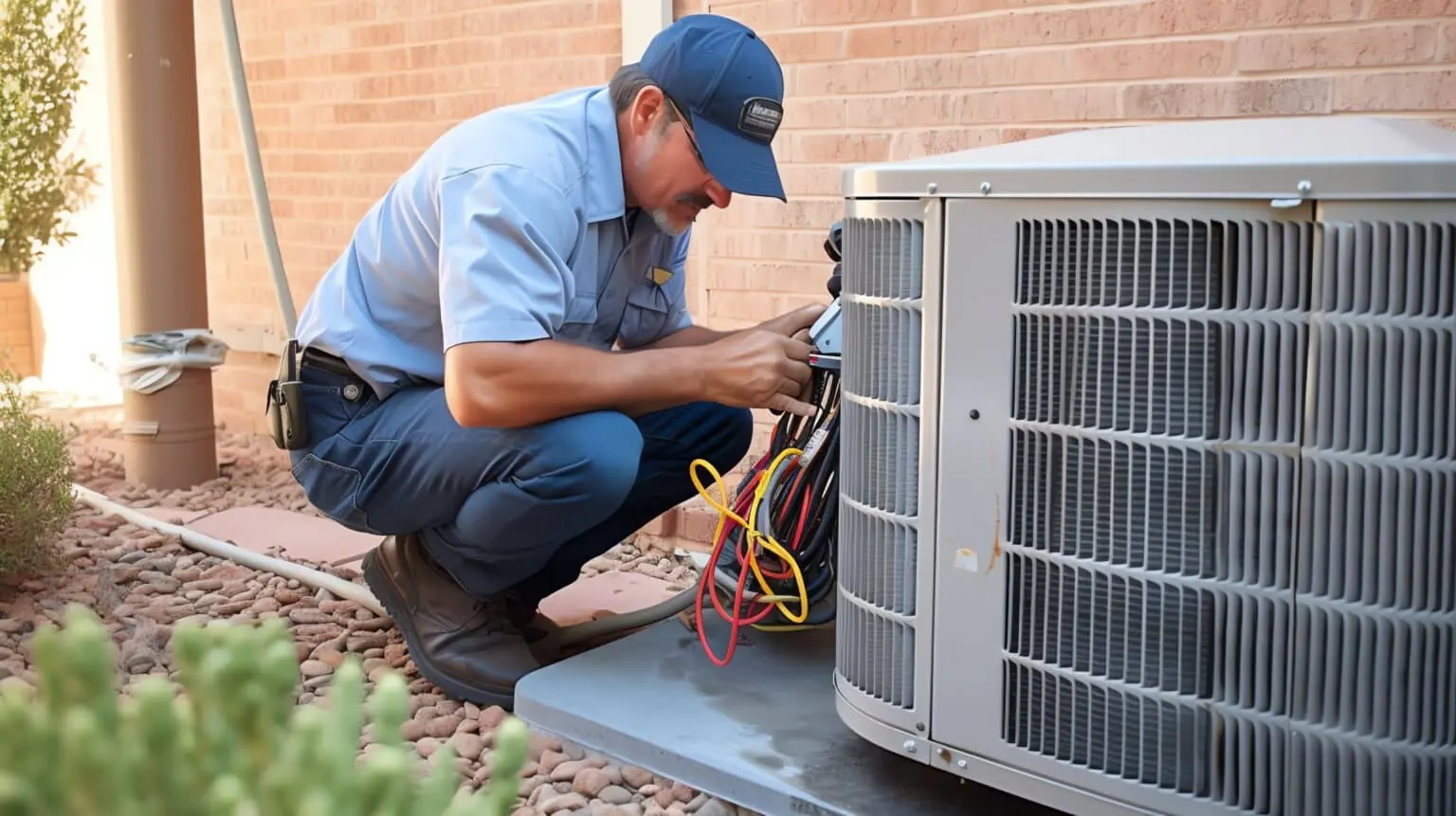
Compare HVAC financing for a new AC, furnace or heat pump. Estimate your monthly payment, check rebates and avoid deferred-interest traps before you sign.
Page last reviewed: October 25, 2026 · By the Home Repair Financing editorial team
HVAC financing lets you spread the cost of a new air conditioner, furnace or heat pump over monthly payments instead of paying all at once. The national average HVAC replacement costs about $8,200, according to a 2026 This Old House survey, so many homeowners choose to finance at least part of the job.
Your main choices are a contractor's promotional plan, a personal loan, a home equity loan or HELOC, or a 0% intro credit card. The right one depends on your credit, your home equity and how fast you can pay the balance off. This guide compares the options, shows example monthly payments and explains what changed for 2026.
Key Takeaways
HVAC financing is any loan or credit plan used to pay for heating, ventilation and air conditioning work. That includes replacing a central AC, furnace, heat pump or boiler, adding ductwork, or installing a ductless mini-split system. You get the system installed now and repay the cost in monthly payments.
Financing can come from the contractor, through a lender the contractor partners with, or from a lender you choose yourself. Contractor plans are convenient because you apply at the kitchen table. Outside loans take a little more effort, but they let you compare rates and keep the financing separate from the price of the system.
Whichever route you take, the cost comes down to four numbers: the amount financed, the APR, the term and any fees. Federal law requires lenders to show the APR, finance charge and total of payments before you agree, under the Truth in Lending rules.
Most single-family homes pay several thousand dollars to replace one piece of equipment, and more when the furnace and AC are replaced together. These 2026 national averages give a starting point for how much you may need to finance.
| Project | Typical cost |
|---|---|
| Central air conditioner | About $8,460 average |
| Gas furnace | About $8,530 average |
| Electric furnace | About $6,890 average |
| Air-source heat pump | About $8,010 average |
| Furnace and AC together | $6,500 to $18,000 (about $10,500 average) |
| Geothermal system | About $17,000 average |
Single-system averages from This Old House (2026 survey). Furnace and AC range from PICKHVAC (2026). Your price depends on home size, ductwork, efficiency rating and local labor costs.
Two other things can push the price up. New ductwork, electrical upgrades or permits add to the bid. And since 2025, new central AC and heat pump systems have been moving to lower-impact refrigerants under EPA rules. In May 2026, the EPA finalized a rule removing the January 1, 2026 installation deadline for R-410A systems made or imported before 2025, so contractors can install that leftover stock until it runs out. Ask your contractor which refrigerant your quote uses and whether parts will be easy to find later.
If you're unsure whether to repair or replace, ENERGY STAR suggests considering replacement when a heat pump or air conditioner is more than 10 years old, or a furnace or boiler is more than 15 years old.
Enter your HVAC quote, an estimated APR and a term to see your monthly payment, total interest and total repayment. Use the price from your written bid, minus any rebate or cash you plan to put down.
Your Estimate
Monthly Payment
This calculator provides estimates for illustrative purposes only and does not constitute an offer of credit or a commitment to lend. Final APRs, loan amounts, and terms depend on credit approval, income verification, and lender underwriting criteria. Minimum and maximum rates/terms vary by state.
Powered by: Home Repair Financing
Here's how the same system price looks under a true 0% plan paid over 60 months, a 12% personal loan and a 24% loan for fair credit, all over five years.
| Amount financed | 0% for 60 months | 12% APR, 5 years | 24% APR, 5 years |
|---|---|---|---|
| $6,000 | $100/mo | $133/mo ($2,008 interest) | $173/mo ($4,356 interest) |
| $8,000 | $133/mo | $178/mo ($2,677 interest) | $230/mo ($5,809 interest) |
| $10,000 | $167/mo | $222/mo ($3,347 interest) | $288/mo ($7,261 interest) |
| $12,000 | $200/mo | $267/mo ($4,016 interest) | $345/mo ($8,713 interest) |
| $15,000 | $250/mo | $334/mo ($5,020 interest) | $432/mo ($10,891 interest) |
Fixed monthly payments, no fees, rounded to the nearest dollar. Rates are examples, not offers. For context, banks averaged 11.90% on 24-month personal loans in August 2026, according to the Federal Reserve.
A longer term lowers the payment but raises the total cost. Stretching a $10,000 loan at 12% to 10 years drops the payment to about $143, but interest more than doubles to about $7,217. Since ENERGY STAR suggests considering replacement once an AC is more than 10 years old, try not to still be paying for a system when it needs replacing again.
Each option trades off cost, speed and risk differently. The table shows where each one fits, followed by what to know about the main choices.
| Option | Best for | Watch out for |
|---|---|---|
| Contractor or manufacturer plan | Convenience and promotional 0% offers | Deferred interest and high rates after the promo |
| Personal loan | Fixed payments with no home equity needed | Higher rates with fair or poor credit; origination fees |
| Home equity loan or HELOC | Lower rates on larger projects | Your home is collateral; closing costs; slower approval |
| 0% intro credit card | Smaller jobs you can repay within the intro period | Credit limits and high rates once the intro period ends |
| FHA Title I loan | Homeowners with little equity | Only certain lenders offer it |
| PACE financing | Areas where it's offered | Repaid through your property tax bill |
Contractor and manufacturer financing is arranged by your installer through a partner lender or a store-style credit card. Some brand programs advertise 0% APR for up to 60 months with equal monthly payments. Carrier's financing page, for example, lists a 28.99% APR for purchases on new Wells Fargo card accounts, according to Carrier. Ask whether the plan is deferred interest or true 0%, and whether the system price is higher if you finance.
Personal loans are unsecured, so you don't need home equity, and many lenders fund within a few business days. You get a fixed rate and a fixed end date, and you can pay the contractor like a cash buyer. Rates depend heavily on your credit score.
Home equity loans and HELOCs usually cost less because your home secures the debt. They make more sense for a large job like a full system with new ducts, but they take longer to close and put your home at risk if you can't pay. On your primary home, you generally get three business days after closing to cancel, under the CFPB's rules for home equity loans and HELOCs.
FHA Title I loans can cover up to $25,000 for a single-family home with terms up to 20 years, and loans under $7,500 may not need to be secured, according to the FDIC's program summary. PACE financing is repaid through your property tax bill. Since March 1, 2026, PACE lenders must check your ability to repay under a CFPB rule. A PACE lien can make it harder to sell or refinance, so read the terms closely.
If you're buying or refinancing a home, an energy-efficient mortgage can roll HVAC upgrades into the mortgage itself.
Sometimes. A true 0% plan with equal payments charges no interest as long as you make every payment on time. A deferred interest plan works differently. You pay no interest only if the whole balance is paid off by the end of the promo. If any balance is left, you may owe all the interest that built up from the purchase date, according to the CFPB.
You finance a $10,000 system on a 12-month deferred interest plan and pay $800 a month. After 12 months, $400 is still owed. At a 28.99% rate, about $1,600 in back interest could be added at once, about four times the balance you missed.
Before you sign a promotional plan, ask these questions:
There's no single minimum. Each lender sets its own rules, and promo plans usually need stronger credit than standard loans. These ranges are general guides, not guarantees.
Lenders also look at your income and debt-to-income ratio. If the payment would strain your budget, a repair or a less expensive system may be the safer choice for now.
Every dollar you don't borrow saves interest. Check these before you settle on a loan amount.
Home Repair Financing is a free loan-matching service, not a lender. Lenders pay us, not you. Not everyone is approved, and terms aren't guaranteed.
A dead furnace in January or a failed AC in a heat wave puts you under pressure to sign the first offer. A few steps can protect you even when you need to move fast. First, ask for a repair quote along with a replacement quote, since a repair may get you through the season while you compare financing. Second, ask whether the contractor can provide temporary heaters or a short-term fix. Third, prequalify for a personal loan online while you wait for bids. Some lenders fund in a few business days, which gives you a cash-buyer option. If you're a lower-income household facing a no-heat emergency, contact your local LIHEAP office, as many states offer crisis help.
Be cautious of anyone who pushes a same-day signature, asks for a large upfront payment or offers financing that sounds too good to be true. If you sign at home, the FTC's Cooling-Off Rule generally gives you three business days to cancel many in-home sales, though there are exceptions, including some emergency repairs.
Possibly. Some personal lenders work with fair or poor credit at higher rates, and a co-borrower or secured loan may improve your odds. Compare the total cost carefully, and check assistance programs like weatherization if your income qualifies.
It depends on the offer. A true 0% plan from the contractor can be the cheapest choice if you pay on time. If the plan uses deferred interest, has a high rate after the promo or raises the system price, an outside personal loan or home equity loan may cost less.
Personal loans often run two to seven years, and some lenders go longer. Contractor promo plans commonly run 12 to 60 months. FHA Title I loans can run up to 20 years, and home equity loans often run 5 to 30 years, but longer terms mean more interest.
Usually, yes. A personal loan or home equity loan can cover the full bid, including labor, ductwork, thermostats and permits. Contractor plans typically cover whatever is on the contractor's invoice.
Not at the federal level for 2026 installs. The 25C credit ended for equipment placed in service after December 31, 2025. State, utility and manufacturer rebates may still be available.
Prequalifying is usually a soft check that doesn't affect your scores. A full application usually triggers a hard inquiry, which may lower your score slightly for a short time.
Age is a good starting point. ENERGY STAR suggests considering replacement for an AC or heat pump older than 10 years or a furnace older than 15 years, especially if repairs are frequent or bills are rising.
Cost averages come from 2026 cost guides. Payment examples assume fixed monthly payments with no fees and are rounded. Example rates are illustrative, not offers. We rely on government sources such as the IRS, EPA, DOE, CFPB and the Federal Reserve where possible. Rules and rebate programs change, so confirm current terms before you act.
Home Repair Financing is a free loan-matching service, not a lender. Lenders pay us, not you. We don't make credit decisions or set rates, terms or funding times. Learn more about us.
Know your project cost? See what a $10,000 home improvement loan or $15,000 home improvement loan costs per month, or find your state's rules.
See rates, fees and repayment terms before you sign a contractor's financing plan.