
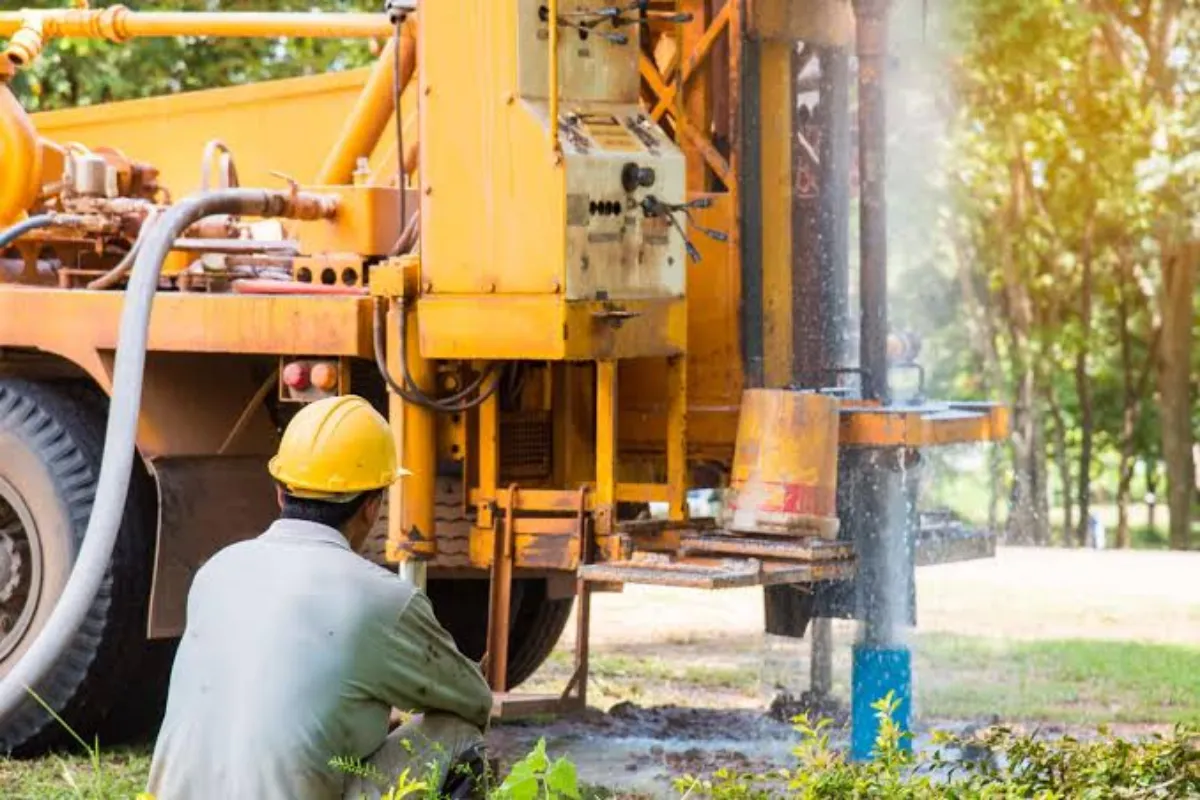
Learn what affects residential well drilling costs and compare loans, payment plans and potential rural assistance programs.
Page last reviewed: October 29, 2026 · By the Home Repair Financing editorial team
Drilling a new well often costs several thousand dollars, and the bill grows with every foot the driller has to go down. Most homeowners pay with savings or with well drilling financing, such as a personal loan, financing arranged by the driller or a home equity loan, and rural households with lower incomes may qualify for 1% loans through USDA programs.
This guide explains what to check before you drill when an old well runs dry, how drillers price the job per foot, which permits and tests to expect, and where to look for help. It also shows what a loan for a new well would cost each month.
Key Takeaways
You can finance well drilling with a personal loan, financing offered through your driller, a home equity loan or line of credit, or a mix of these. If your old well is dry, speed matters. If you're adding a well to new land or replacing a weak one, you have more time to compare.
| Option | Good fit when | Watch out for |
|---|---|---|
| Unsecured personal loan | You need the money quickly and don't want to borrow against your home | Rates and approval depend on the lender and your credit. An origination fee may be taken out of the loan, so you receive less than you borrow. |
| Driller financing | Your driller works with a bank or finance company and the terms beat your other offers | Compare the APR and total cost with outside offers. Some promos use deferred interest, which can charge interest back to the start if you miss the payoff deadline. |
| Home equity loan or home equity line of credit (HELOC) | You have equity, the project is large and you can wait a few weeks to close | Your home is collateral. HELOC rates are commonly variable, and there may be appraisal and closing costs. |
| 0% intro APR credit card | You're covering a smaller piece, like the permit or a pump, and can pay it off before the intro period ends | Any balance left after the intro period is charged the card's regular rate. |
Some drillers offer bank financing through a water well loan program set up by the National Ground Water Association, with terms that depend on the bank. Treat it like any other offer and compare the full cost. If you're deciding between borrowing against your home and a loan that isn't, see our guide to a personal loan vs. a HELOC.
Not always. A worn-out or failed pump is the most frequent cause of losing water, and pressure tank or electrical switch problems can also stop the flow, Penn State Extension says. Have a well driller or qualified plumber find the cause before you pay for drilling.
If the water level really has dropped, it may come back. Penn State notes that groundwater is often lowest in early fall and can rise again as rain recharges it. A well may also run short only during heavy use, like back-to-back showers and laundry.
| Option | What it does | Limits |
|---|---|---|
| Conserve and wait | Gives the water level time to recover after a dry spell | Works only if the drop is temporary |
| Lower the pump | Sets the pump deeper so it reaches water again | Usually a short-term fix, and it may pull in more sediment |
| Hydrofracturing (forcing water under high pressure into a rock well to open cracks) | Can increase the flow from a bedrock well | The benefit may be small or short-lived if the water table has dropped below the well's water-bearing cracks |
| Deepen the well | Drills further into the same well, at about $3,000 to $6,000 | May not add much water and can change water quality |
| Drill a new well | The most permanent fix | The most expensive option |
Sources: Penn State Extension, Massachusetts drought guidance for well owners and Bob Vila for deepening costs. A local driller or hydrogeologist can tell you which option fits your well.
While you sort it out, you still need water. Massachusetts suggests asking your town whether you can connect to public water, and asking your fire department or school whether you can use their facilities. A water hauler can fill a temporary holding tank, but check with your local plumbing inspector about permits first.
Don't count on insurance for a dry well. Standard policies generally don't pay to deepen or redrill a well that dried up from drought or a falling water table, MoneyGeek explains. They may cover damage to the well from a covered event like fire, lightning or vandalism.
HomeAdvisor puts the average cost to drill a well at about $5,500, with most homeowners paying $3,000 to $9,000. For a home well, drilling typically runs $25 to $65 per foot, and most jobs fall between $25 and $35 per foot. HomeAdvisor says most home wells are 50 to 200 feet deep, but rock and local geology can push that higher.
Casing is the pipe that lines the well and keeps it from caving in. Plastic (PVC) casing costs less than steel, and wider steel casing raises the price at every depth. Here's how HomeAdvisor's estimates add up as a well gets deeper.
| Well depth | With 4-inch PVC casing | With 6-inch steel casing |
|---|---|---|
| 100 feet | $3,550 | $6,120 |
| 200 feet | $7,100 | $12,240 |
| 300 feet | $10,650 | $18,360 |
| 400 feet | $14,200 | $24,480 |
Source: HomeAdvisor estimates by depth and casing type, before the pump and other parts. Ask your driller exactly what a per-foot price includes, since quotes are built differently. Your driller can estimate depth from nearby well records, but no one knows the final depth until water is found.
A working water system needs more than a hole. Ask whether your quote includes these parts, since they're often priced separately.
| Part of the job | Typical cost |
|---|---|
| Permit | $200 to $500 |
| Pressure tank and switch | $300 to $500 |
| Lab water testing | $50 to $600 |
| Well pump | $900 to $2,500 |
| Electric line to the well | $50 to $150 per foot, plus $160 to $500 labor |
| Water treatment system, if needed | $1,000 to $15,000, plus $200 to $400 labor |
Source: HomeAdvisor. If you're replacing a well, you may be able to reuse a pump or tank that's in good shape.
Usually. HomeAdvisor says most local governments require a permit before drilling. Some states also certify well drillers, and Massachusetts, for example, directs homeowners to its list of certified drillers. Your county health department can tell you the local rules, including how far a new well must sit from a septic system.
Drilling itself often takes one to three days, and adding the pump, wiring and plumbing brings the job to about a week, according to HomeAdvisor. Rocky ground or permit delays can stretch that out.
Plan for the old well, too. An unused well left open can let fertilizer, pesticides and other contaminants flow straight into groundwater, and it's a hazard for anyone walking nearby, Nebraska's Lewis and Clark Natural Resources District explains. Have a licensed contractor seal it, and ask whether your local district or county shares the cost, as some do.
Test the water before you drink it. The EPA recommends testing a private well at least once a year for total coliform bacteria, nitrates, total dissolved solids and pH, using a lab certified for drinking water. Ask your health department which other substances are common in your area's groundwater. Since federal drinking water rules don't cover private wells, the EPA notes, safe water is the owner's job.
Your monthly payment depends on how much you borrow, your APR and how long you take to repay. The examples below show estimated payments for common well projects at three example APRs.
| Loan amount (5-year term) | At 12% APR | At 20% APR | At 28% APR |
|---|---|---|---|
| $6,000 | $133/mo, $2,008 interest | $159/mo, $3,538 interest | $187/mo, $5,209 interest |
| $10,000 | $222/mo, $3,347 interest | $265/mo, $5,896 interest | $311/mo, $8,681 interest |
| $15,000 | $334/mo, $5,020 interest | $397/mo, $8,844 interest | $467/mo, $13,022 interest |
These are example APRs to show how your rate changes the cost, not current offers. Personal loan APRs vary widely by lender and credit. Examples assume a fixed rate and no fees, rounded to the nearest dollar, and an origination fee would raise your actual cost.
Because the final depth isn't known until the driller hits water, ask for a not-to-exceed price or a per-foot rate in writing, and leave some room in your budget. Our $10,000 home improvement loan page shows costs for a budget in this range.
Use the calculator below to estimate your monthly payment and total interest. Enter the amount you plan to borrow, an estimated APR and a repayment term. Your actual loan offer may include different rates or fees.
Your Estimate
Monthly Payment
This calculator gives estimates only. It isn't a loan offer or a promise to lend. Your actual APR, loan amount and terms depend on the lender's review of your credit and income, and limits vary by state. The slider ranges are for estimating and don't reflect what lenders offer.
Powered by: Home Repair Financing
Some help exists, mostly for rural homeowners with lower incomes. Programs have waiting lists and limited funding, so if your well is dry, apply early and line up a backup plan for water at the same time.
Our guides to home repair grants and low-income home repair loans list more places to look.
Watch for "Guaranteed Approval"
Legitimate lenders won't promise or guarantee you a loan before you apply, the FTC warns, and no real lender will say that paying a fee guarantees you'll get one. If someone wants a fee up front before granting the loan, walk away. Learn more about how to spot home repair scams.
Related Resources
Most home wells cost several thousand dollars to drill, and a deep well with a new pump and tank can cost much more. Drillers usually charge by the foot, so depth is the biggest factor. Ask for the per-foot rate and what's included in writing.
Yes. Personal loans, driller financing and home equity loans can all pay for a new well. Eligible rural homeowners may also qualify for low-interest USDA-funded loans through nonprofit lenders.
There's no single minimum. Each lender sets its own requirements, and many personal loan lenders look for a score of about 580 or higher, according to Bankrate. A higher score usually means a lower rate.
Usually not. Standard policies don't pay to deepen or redrill a well that dried up from drought or a falling water table. They may cover damage from a covered event, such as fire, lightning or vandalism.
It depends on your geology and the cause of the problem. Deepening costs less but may not add much water, while a new well is more permanent. A local driller or hydrogeologist can compare both for your property.
Many home wells are about 50 to 200 feet deep, but some need to go much deeper. It depends on where groundwater sits under your land. Your driller can check nearby well records for an estimate.
The drilling itself often takes one to three days. Installing the pump, wiring and plumbing usually brings the job to about a week. Permits, weather and hard rock can add time.
It depends on your equity, your timeline and how much risk you can take. A home equity loan often has a lower rate, but your home is collateral and closing can take weeks. A personal loan is usually faster and doesn't use your home, though rates are often higher.
It should be sealed by a licensed contractor. An open, unused well can let contaminants reach groundwater and can be a safety hazard. Some local districts help pay for sealing.
We use cost guides, extension research and government sources to explain well drilling costs and financing. Cost estimates are national averages and vary widely by region and geology. Our payment examples are estimates, not loan offers. Rates and program rules can change.
See what loan options may be available for drilling a new or replacement well. It's free to submit a request, and you don't have to accept any offer. If you're matched, a participating lender may contact you directly and will set its own eligibility, rates, fees and funding time.
This page was written with the help of AI tools and reviewed and fact-checked by the Home Repair Financing editorial team.