
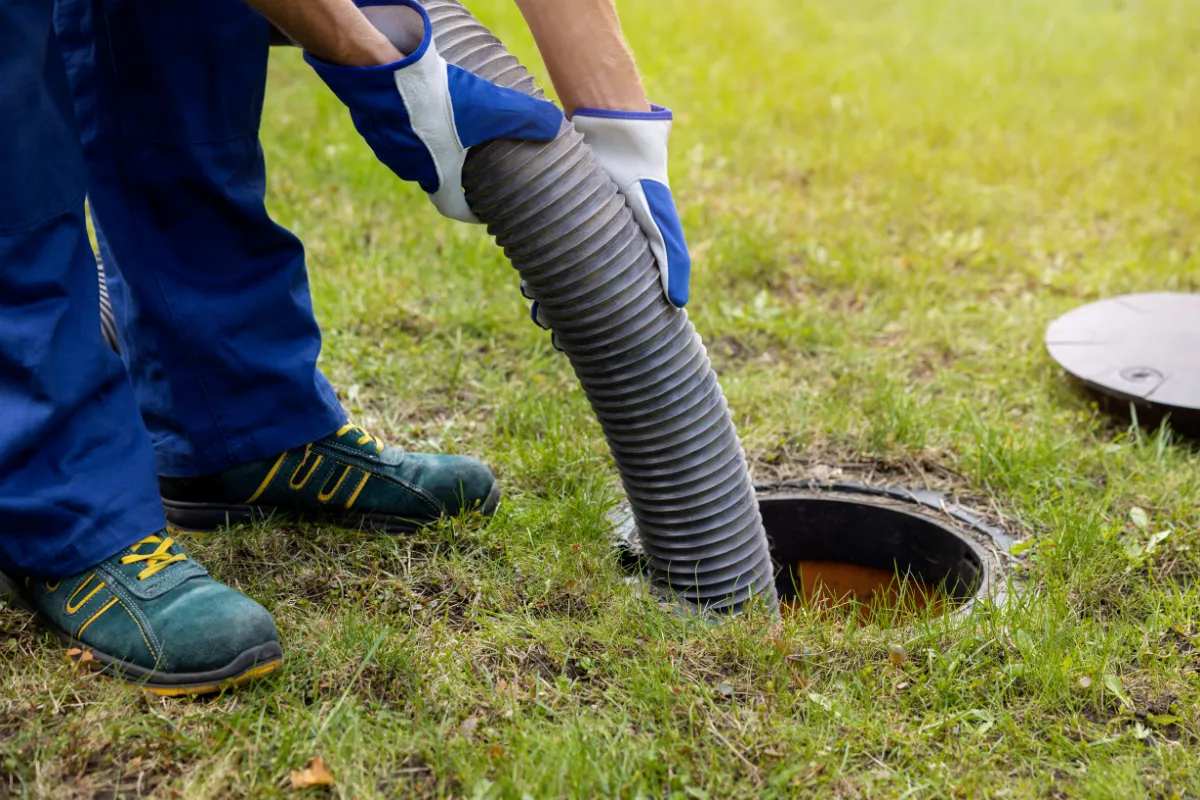
Compare septic-to-sewer conversion costs, local assistance programs and financing options for connecting your home to public sewer.
Page last reviewed: October 29, 2026 · By the Home Repair Financing editorial team
When public sewer reaches your street, your town may require you to connect and close your septic tank, often by a set deadline. Septic to sewer conversion financing can come from a payment plan or assessment from your town or utility, a local assistance program, a personal loan or a home equity loan, and many owners combine more than one.
This guide breaks down the separate bills involved, from the utility's connection fee to the plumber's work and closing the old tank. It also explains mandatory hookup rules, how assessment financing works and what to compare before you borrow.
Key Takeaways
You can finance a septic to sewer conversion through your town or utility, a local assistance program, a personal loan, a home equity loan or line of credit, or a mix of these. Because the bill is split among the utility, your plumber and sometimes the county, you may use one option for fees and another for construction.
| Option | Good fit when | Watch out for |
|---|---|---|
| Town or utility payment plan or assessment | Your utility lets you spread connection fees or construction costs over several years | Payments may be added to your property tax or utility bill. Unpaid amounts can become a lien, and the balance may need to be paid off if you sell. |
| Unsecured personal loan | Your town has no payment plan, or it covers only part of the cost | Rates and approval depend on the lender and your credit. An origination fee may be taken out of the loan, so you receive less than you borrow. |
| Home equity loan or home equity line of credit (HELOC) | The total is large and you have equity and time before the deadline | Your home is collateral. HELOC rates are commonly variable, and there may be closing costs. |
| Plumber or contractor financing | Your plumber offers a true 0% or low-rate plan you can pay off on time | Some promos use deferred interest, which can charge interest back to the start if you miss the payoff deadline. |
Ask your utility about payment options before you sign anything else. Hudson, New Hampshire, for example, offers a payment plan for its connection fee, though that fee doesn't cover the plumber's or excavator's work. If you're not being required to connect and your septic system is failing, our septic system financing guide covers repairing or replacing it instead.
Often, yes. Many local governments, and some states, require homes to connect once a public sewer line runs past the property, but the rules vary by place. Your sewer utility or local health department can tell you whether connection is required, by when and whether any exceptions apply.
Florida is one example. Under Florida law, an owner with a working septic system generally must connect within 365 days of written notice that sewer is available. If the system needs repair, the deadline can be much shorter. The utility must also give advance notice, and the law lets owners prepay connection charges in monthly installments.
Deadlines and rules change as projects move forward, so get the requirement in writing. If you can't meet the deadline because of cost, ask about hardship options early. Florida's law, for example, lets local governments allow some owners with financial hardship to pay certain connection fees over time without interest.
The total depends on how far your house sits from the sewer main, your town's fees and what's in the way of the trench. Forbes Home estimates a full septic to sewer conversion at about $6,400 to $18,000 for a 30-foot connection, including permits, pipe, trenching and closing the septic tank.
| Cost | Who you usually pay | Typical cost |
|---|---|---|
| Connection, tap or capacity fee (a one-time charge to join the system) | Sewer utility or town | Set locally and varies widely |
| Permit | Town or county | $200 to $4,800 |
| Trenching for the new line | Plumber or excavator | $30 to $100 per linear foot |
| Backflow preventer, if required | Plumber | $75 to $1,200 for the part |
| Closing or removing the septic tank | Septic contractor | Can run several thousand dollars, depending on local rules |
Source: Forbes Home, except connection fees, which each utility sets. Landscaping and driveway repair can add to the total.
The new pipe from your house to the street is called a lateral. Homeowners often pay for the section on their own property, but rules vary. Our sewer line replacement guide explains who owns which section and how lateral repairs are priced.
Some homes sit lower than the sewer main or far from it and need a grinder pump, which grinds waste and pumps it uphill into the line. Ask whether your project needs one, who owns it and who pays for power and repairs.
Plan for a new monthly bill, too. Once you're connected, you'll pay the utility for sewer service, but you'll no longer pay to pump and maintain a septic tank.
When a town extends sewer into a neighborhood, it may charge the homes that benefit a special assessment, sometimes called a betterment fee, to help pay for the new main. Some towns let owners pay it over years on the property tax bill instead of all at once.
Some utilities also finance the homeowner's own costs this way. In California, Central Contra Costa Sanitary District's Septic to Sewer program offers low-interest financing for eligible connection fees, the new side sewer and septic tank abandonment. Owners repay it over 15 years on their annual property tax bill, with no penalty for paying early.
Assessment financing can be cheaper and easier to qualify for than a loan, but read the terms. Ask about the interest rate, how long you'll pay, whether the balance must be paid off when you sell and what happens if a payment is late. Because the charge is tied to your property, missing payments can have serious consequences.
It has to be closed properly, a process often called abandonment. A tank left in the ground without being properly collapsed and filled can be a safety hazard. Many local health departments require a permit and an inspection.
Rules differ by place, but the steps are often similar. In Charlotte County, Florida, for example, the health department requires an abandonment permit, pumping by a licensed septage hauler, crushing or collapsing the tank so it can't hold water, filling the hole with clean sand or similar material and an inspection. Some areas require full removal instead.
Get the cost of closing the tank in your plumber's quote or a separate written estimate, so it's part of the amount you finance.
Your monthly payment depends on how much you borrow, your APR and how long you take to repay. The examples below show estimated payments for common conversion budgets at three example APRs.
| Loan amount (5-year term) | At 12% APR | At 20% APR | At 28% APR |
|---|---|---|---|
| $5,000 | $111/mo, $1,673 interest | $132/mo, $2,948 interest | $156/mo, $4,341 interest |
| $10,000 | $222/mo, $3,347 interest | $265/mo, $5,896 interest | $311/mo, $8,681 interest |
| $15,000 | $334/mo, $5,020 interest | $397/mo, $8,844 interest | $467/mo, $13,022 interest |
These are example APRs to show how your rate changes the cost, not current offers. Personal loan APRs vary widely by lender and credit. Examples assume a fixed rate and no fees, rounded to the nearest dollar, and an origination fee would raise your actual cost.
If your town offers a payment plan or assessment, compare its rate and total cost with these examples. Borrowing only for the part the town won't finance can keep your loan smaller. Our credit score requirements guide explains what affects the rate you're offered.
Use the calculator below to estimate your monthly payment and total interest. Enter the amount you plan to borrow, an estimated APR and a repayment term. Your actual loan offer may include different rates or fees.
Your Estimate
Monthly Payment
This calculator gives estimates only. It isn't a loan offer or a promise to lend. Your actual APR, loan amount and terms depend on the lender's review of your credit and income, and limits vary by state. The slider ranges are for estimating and don't reflect what lenders offer.
Powered by: Home Repair Financing
Sometimes, and it's almost always local. Many conversion projects exist to protect nearby lakes, bays or drinking water, so counties, utilities and states sometimes set aside money to help owners connect. Funding is limited and often first-come, first-served, so ask as soon as you get a notice.
Our guides to home repair grants and home repair loans for seniors list more programs.
Watch for "Guaranteed Approval"
Legitimate lenders won't promise or guarantee you a loan before you apply, the FTC warns, and no real lender will say that paying a fee guarantees you'll get one. If someone wants a fee up front before granting the loan, walk away. Learn more about how to spot home repair scams.
Related Resources
Usually some of it, since the new line runs in a trench from your house to the street. Lawn, landscaping, walkways or a driveway in the path may need repair afterward. Ask whether your quote includes restoring the yard, and whether any part of the line can be installed without a full trench.
Many conversions cost several thousand dollars, and long or difficult trenches can cost much more. The total depends on the distance to the sewer main, local connection fees, permits and the cost to close the septic tank. Get itemized quotes and ask the utility for its fee schedule.
Yes. Some towns offer payment plans or assessments, and personal loans, home equity loans and contractor financing can cover the rest. Approval and rates depend on the lender and your credit.
There's no single minimum. Each lender sets its own requirements, and many personal loan lenders look for a score of about 580 or higher, according to Bankrate. A higher score usually means a lower rate.
Usually the homeowner pays for the connection fee and the work on their own property. The town or utility typically pays for the main line in the street, sometimes recovering part of it through assessments. Local rules decide the split.
It must be closed properly, usually under a permit. That often means having it pumped, then collapsing or removing the tank and filling the hole, followed by an inspection. Your health department sets the steps.
Yes. Once you're connected, the utility bills you for sewer service. You'll no longer pay for septic pumping and maintenance.
Sometimes. Some towns let owners pay assessments in installments on the property tax bill. Ask about the rate, the term and whether the balance must be paid off when you sell.
Sometimes. Some counties, utilities and state-funded projects offer grants or low-interest loans, usually based on income or location. Ask your sewer provider what's available for your project.
We use cost guides, state law, local government program pages and federal sources to explain septic to sewer costs and financing. Local fees and rules vary widely, so check with your sewer utility. Our payment examples are estimates, not loan offers. Rates and program rules can change.
See what loan options may be available to connect your home to public sewer. It's free to submit a request, and you don't have to accept any offer. If you're matched, a participating lender may contact you directly and will set its own eligibility, rates, fees and funding time.
This page was written with the help of AI tools and reviewed and fact-checked by the Home Repair Financing editorial team.