
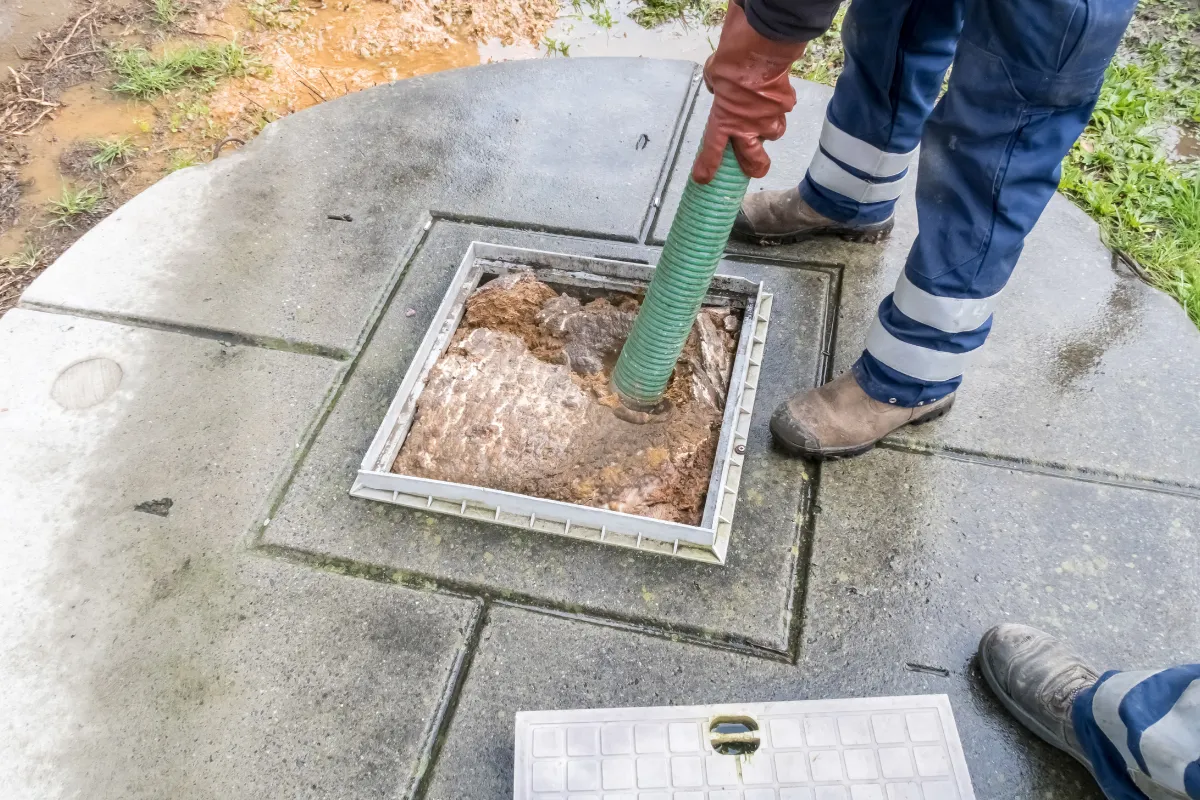
Explore cesspool replacement costs, septic upgrade requirements, possible local grants and financing options for homeowners.
Page last reviewed: October 29, 2026 · By the Home Repair Financing editorial team
Replacing a cesspool usually means installing a full septic system or a newer treatment unit, and in some areas that can cost tens of thousands of dollars. Cesspool replacement financing can include state or county grants and low-interest loans where they exist, personal loans, home equity loans or a combination, often starting with whatever local program covers their area.
This guide explains how a cesspool differs from a septic system, where phase-out rules apply, what replacement systems cost and which programs may help. It also shows what a loan for the balance would cost each month.
Key Takeaways
You can finance cesspool replacement with a public grant or low-interest loan, a home equity loan or line of credit, a personal loan, contractor financing, or a mix. Public programs often pay only part of the cost or reimburse you after the work, so many owners need a second source to cover the rest.
| Option | Good fit when | Watch out for |
|---|---|---|
| State or county grant or low-interest loan | Your area runs a cesspool or septic upgrade program and you meet its rules | Funding is limited, approval can take months, and some programs require approval before work starts or pay you back afterward. |
| Home equity loan or home equity line of credit (HELOC) | The project is large and you have equity | Your home is collateral. HELOC rates are commonly variable, and there may be closing costs. |
| Unsecured personal loan | You need to cover a gap or can't wait for a home equity loan to close | Rates and approval depend on the lender and your credit. An origination fee may be taken out of the loan, so you receive less than you borrow. |
| Contractor financing | Your installer offers a true 0% or low-rate plan you can pay off on time | Some promos use deferred interest, which can charge interest back to the start if you miss the payoff deadline. |
If a grant reimburses you after the job, you may need short-term money to pay the installer first. Ask the program and your installer how payments are timed before you sign. Our guide to a home equity loan vs. a HELOC can help if you're borrowing against your home for a larger system.
A cesspool is an underground pit that collects household waste and lets it seep into the soil without treating it, according to the EPA. A septic system has a buried tank that separates solids and a drain field that spreads the liquid through soil, which gives it some treatment.
That difference matters for your water. Cesspool wastewater often carries high levels of nitrates and coliform bacteria, the EPA says, and areas that rely on cesspools often get their drinking water from groundwater. Hawaii's Department of Health calls cesspools "little more than holes in the ground" and notes that the waste often sits close to groundwater, which can carry it to wells, streams and the ocean.
| Feature | Cesspool | Septic system |
|---|---|---|
| Treatment | None | Some, through the tank and soil |
| Main parts | A single pit or ring | Tank, distribution pipes and drain field |
| Rules | Banned or being phased out in some states and counties | Allowed in most areas, with permits and setbacks |
Source: EPA. Your local health department decides which systems are allowed on your lot.
Federal rules banned large-capacity cesspools, such as those serving businesses or multiple homes, by 2005. A cesspool serving only one single-family home isn't covered by that federal ban, so state and local rules decide its future. If you're not sure what you have, your health department may have permit records, or a septic inspector can tell you. If you already have a septic system that's failing, our septic system financing guide covers repairs and replacement.
Several states and counties have moved to retire cesspools, especially near coastlines, bays and drinking water sources. Deadlines and details change as lawmakers revise them, so check the current rules with your health department before you plan.
Even where there's no deadline, a failed cesspool may have to be replaced with an approved system. Rhode Island, for example, requires failed cesspools anywhere in the state to be replaced. Expect your health department to ask for a septic system, an advanced treatment unit or a sewer connection rather than a new cesspool.
The price depends mainly on the system that replaces the cesspool. Soil, groundwater depth, lot size and local rules decide which system you can install. In Hawaii, a single cesspool conversion typically costs $25,000 to $50,000, according to a wastewater nonprofit's estimate reported by Hawaii Public Radio. National averages for new septic systems are lower.
| Replacement system | When it's used | Typical installed cost |
|---|---|---|
| Conventional septic system | Soil drains well and the lot has room for a drain field | $3,000 to $8,000 |
| Chamber system | A lighter drain field option for some soils | $5,000 to $12,000 |
| Drip system | Shallow soil or tight lots | $8,000 to $18,000 |
| Aerobic treatment unit (adds oxygen to break down waste) | Sensitive areas or rules that require more treatment | $10,000 to $20,000 |
| Mound system | High groundwater or poor soil | $10,000 to $20,000 |
Source: HomeAdvisor national installation estimates. Costs in Hawaii, coastal areas and places that require nitrogen-reducing systems can be much higher.
Other costs may include design and soil testing, permits and closing the old cesspool. HomeAdvisor puts building permits at $450 to $2,300 and soil engineers, who run percolation tests that measure how fast soil absorbs water, at $700 to $2,000. Newer treatment units may also need yearly service contracts and electricity, so ask what upkeep will cost before you choose.
If a public sewer runs near your home, ask whether connecting is allowed and what it would cost. It may be cheaper than a new onsite system, and some sewer projects are funded to cover part of the hookup.
Your monthly payment depends on how much you borrow, your APR and how long you take to repay. The examples below show estimated payments for common replacement budgets at three example APRs.
| Loan amount (5-year term) | At 12% APR | At 20% APR | At 28% APR |
|---|---|---|---|
| $10,000 | $222/mo, $3,347 interest | $265/mo, $5,896 interest | $311/mo, $8,681 interest |
| $20,000 | $445/mo, $6,693 interest | $530/mo, $11,793 interest | $623/mo, $17,363 interest |
| $30,000 | $667/mo, $10,040 interest | $795/mo, $17,689 interest | $934/mo, $26,044 interest |
These are example APRs to show how your rate changes the cost, not current offers. Personal loan APRs vary widely by lender and credit. Examples assume a fixed rate and no fees, rounded to the nearest dollar, and an origination fee would raise your actual cost.
At these amounts, the gap between rates adds up fast. Grants and low-rate public loans can shrink what you borrow, so apply for them before you finalize a loan. Our $25,000 home improvement loan page shows costs for a budget in this range.
Use the calculator below to estimate your monthly payment and total interest. Enter the amount you plan to borrow, an estimated APR and a repayment term. Your actual loan offer may include different rates or fees.
Your Estimate
Monthly Payment
This calculator gives estimates only. It isn't a loan offer or a promise to lend. Your actual APR, loan amount and terms depend on the lender's review of your credit and income, and limits vary by state. The slider ranges are for estimating and don't reflect what lenders offer.
Powered by: Home Repair Financing
In some places, yes. Areas with cesspool phase-outs often pair the rules with grants or low-interest loans, and rural programs may help elsewhere. Funding is limited and terms change, so check what's open before you hire an installer.
Our guides to home repair grants and low-income home repair loans list more programs.
Watch for "Guaranteed Approval"
Legitimate lenders won't promise or guarantee you a loan before you apply, the FTC warns, and no real lender will say that paying a fee guarantees you'll get one. If someone wants a fee up front before granting the loan, walk away. Learn more about how to spot home repair scams.
Related Resources
It ranges from several thousand dollars for a conventional septic system to tens of thousands for an advanced treatment unit. Soil, lot size and local rules decide which system you can install. Coastal areas and places with strict nitrogen limits tend to cost more.
Yes. Public grants and low-interest loans may cover part of the cost where they exist, and personal loans, home equity loans and contractor financing can cover the rest. Approval and rates depend on the lender and your credit.
There's no single minimum. Each lender sets its own requirements, and many personal loan lenders look for a score of about 580 or higher, according to Bankrate. Public programs set their own eligibility rules.
Large-capacity cesspools are banned under federal rules, but a cesspool serving one single-family home isn't covered by that ban. Some states and counties restrict or phase them out, and many require a different system when one fails. Check with your local health department.
State law sets a deadline of 2050 for replacing cesspools. The state can set priorities for higher-risk areas, and rules may change, so check with the Hawaii Department of Health for your property.
Usually not where phase-out rules apply. Health departments generally require a septic system, an advanced treatment unit or a sewer connection. Ask your local office before you get quotes.
Check your property records or ask your local health department for permit records. A septic inspector can also locate and identify the system before you buy or plan work.
If sewer is available, connecting may cost less and remove future septic upkeep. It depends on the distance to the main and local fees. Ask your sewer utility for a cost estimate and compare it with installer quotes.
It depends on where you live. Some states and counties require an inspection or upgrade when a home changes hands, while others only require replacement when a cesspool fails or a deadline arrives. Ask your local health department before you list the home, since the answer can affect your price and closing timeline.
We use cost guides, federal and state environmental agencies, news reports and program pages to explain cesspool replacement costs and financing. Cost estimates vary widely by region and system type. Our payment examples are estimates, not loan offers. Rates, laws and program rules can change.
See what loan options may be available to replace your cesspool. It's free to submit a request, and you don't have to accept any offer. If you're matched, a participating lender may contact you directly and will set its own eligibility, rates, fees and funding time.
This page was written with the help of AI tools and reviewed and fact-checked by the Home Repair Financing editorial team.