
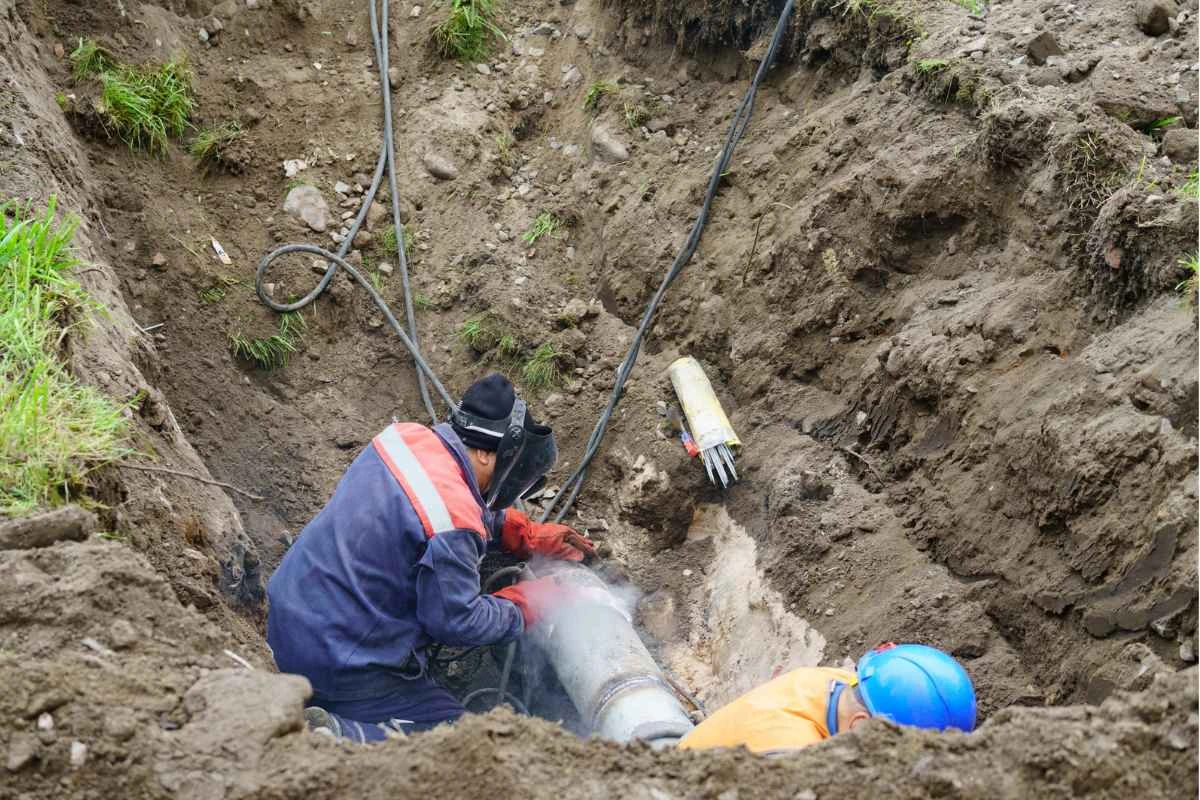
Facing a broken main water line? Explore replacement costs, homeowner responsibilities and financing options for urgent repairs.
Page last reviewed: October 29, 2026 · By the Home Repair Financing editorial team
Replacing the main water line between the meter and your house often costs a few thousand dollars, and long runs or hard digging can push it higher. Water line replacement financing through a personal loan, a plumber's payment plan or a utility loan program can spread out the cost. If your line is made of lead, your water utility may help pay for it.
This guide covers the pipe that brings clean water into your home, not the sewer line that carries waste out. It explains where your responsibility usually starts, how lead service line replacement programs work, what the job costs and how to compare financing.
Key Takeaways
You can finance a main water line replacement with a utility loan program, a personal loan, a plumber's payment plan, home equity or a credit card. A leaking line often can't wait long, so speed matters as much as rate.
| Option | Good fit when | Watch out for |
|---|---|---|
| Water utility loan program | Your utility offers a low- or 0% loan for private water line work | Only some utilities offer one. Some have income limits, require approved contractors or place a lien on the property. |
| Unsecured personal loan | You need a fixed payment and funds within days | Rates and approval depend on the lender and your credit. An origination fee may be taken out of the loan, so you receive less than you borrow. |
| Plumber's payment plan | The plumber offers a true 0% APR or low rate you can pay off on time | Some promos use deferred interest, which can charge interest back to the start if you miss the payoff deadline. |
| Home equity loan or home equity line of credit (HELOC) | You have equity and the job is large, such as a long run under a driveway | Your home is collateral, and setup can take weeks. |
| 0% intro APR credit card | A short section or repair you can pay off before the intro period ends | Any balance left after the intro period is charged the card's regular rate. |
Utility programs can be a good deal when you qualify. Philadelphia's HELP loan, for example, offers a 0% rate repaid over 60 months, and Charlotte Water offers an interest-free, 5-year loan to income-eligible owners, secured by a lien on the home. If a plumber offers financing instead, read our comparison of contractor financing vs. a personal loan.
It depends on your city, but the homeowner usually owns at least part of the service line, the pipe that connects the public water main to your house. Where your part begins varies a lot.
| Example utility | Homeowner's part of the line |
|---|---|
| Charlotte Water (North Carolina) | The private line from the meter to the house. The utility handles the main and the road right-of-way. |
| Philadelphia Water Department | The whole service line. The city says service lines are the homeowner's responsibility. |
Sources: Charlotte Water and Philadelphia Water Department. Ask your own utility where its responsibility ends.
Before you hire a plumber, call your water utility. Ask where the meter and shut-off valve are, where your responsibility starts and whether the leak could be on its side. If the problem is on the utility's part of the line, ask it to handle the repair before you hire anyone, and confirm whether you'll be charged.
This page covers the water supply line. The pipe that carries wastewater from your home to the sewer is a separate line with separate rules. If you're dealing with a backup or a broken drain, see our sewer line replacement financing guide.
Millions of lead service lines still carry water to properties across the U.S., according to the EPA. Lead pipes are more likely in older cities and in homes built before 1986. Lead can enter drinking water when these pipes corrode, and you can't see, taste or smell it.
EPA rules require most water systems to replace their lead service lines on a set timeline, according to an EPA fact sheet. Rules and deadlines have changed in recent years and could change again, so ask your utility for its current plan.
If your line is lead and the utility will replace it soon at little or no cost, waiting for the program may make sense, as long as the line isn't leaking. In the meantime, use cold water for drinking and cooking and a filter certified to remove lead, as the EPA advises.
Main water line replacement costs $1,500 to $12,000, with an average of about $3,750, according to Fixr. Most people pay $100 to $200 per linear foot, so the distance from the meter to your house is the biggest factor.
| Cost item | Typical cost |
|---|---|
| Trenchless replacement (pulling new pipe through with minimal digging) | $75 to $150 per linear foot |
| Traditional trench, dig and backfill | $175 to $225 per linear foot |
| Plumbing permit | $50 to $400 |
| Inspection | $150 to $500, free in some cities |
| Main shut-off valve replacement | Up to $600 |
Sources: Fixr (replacement, per-foot and permit costs) and HomeAdvisor (inspection and shut-off valve). Restoring a lawn, walkway or driveway may cost extra.
Not every site suits trenchless work, so ask each plumber which method they'd use and why. Also ask whether the quote includes restoring your yard, sidewalk or driveway, since those costs can surprise you.
A single leak doesn't always mean you need a whole new line. If the rest of the pipe is in good shape, a repair may be enough. On an older line with repeated leaks, or a lead or galvanized pipe, replacement is usually worth pricing out before you pay for another repair.
A leak in the main water line is usually underground, so the clues show up in your yard and on your bill. Fixr lists these common signs:
A hidden leak keeps adding to your water bill, so call a plumber or your utility soon. A properly installed main line can last up to 50 years, Fixr says.
Don't expect homeowners insurance to pay for a new line. Damage to a water main line is usually considered external, so most policies don't cover it, HomeAdvisor explains. Coverage typically requires a service line add-on, Fixr notes. If you have one, or a separate water line protection plan, call before work starts and ask about limits and required contractors.
Your monthly payment depends on how much you borrow, your APR and how long you take to repay. The examples below show estimated payments for common water line budgets at three example APRs.
| Loan amount (5-year term) | At 12% APR | At 20% APR | At 28% APR |
|---|---|---|---|
| $3,000 | $67/mo, $1,004 interest | $79/mo, $1,769 interest | $93/mo, $2,604 interest |
| $5,000 | $111/mo, $1,673 interest | $132/mo, $2,948 interest | $156/mo, $4,341 interest |
| $10,000 | $222/mo, $3,347 interest | $265/mo, $5,896 interest | $311/mo, $8,681 interest |
These are example APRs to show how your rate changes the cost, not current offers. Personal loan APRs vary widely by lender and credit. Examples assume a fixed rate and no fees, rounded to the nearest dollar, and an origination fee would raise your actual cost.
A shorter term raises the payment but cuts the interest. If your utility offers a 0% loan, compare its payment with these examples before you apply elsewhere.
Use the calculator below to estimate your monthly payment and total interest. Enter the amount you plan to borrow, an estimated APR and a repayment term. Your actual loan offer may include different rates or fees.
Your Estimate
Monthly Payment
This calculator gives estimates only. It isn't a loan offer or a promise to lend. Your actual APR, loan amount and terms depend on the lender's review of your credit and income, and limits vary by state. The slider ranges are for estimating and don't reflect what lenders offer.
Powered by: Home Repair Financing
Start with your water utility. Many of the best options for this repair come from utilities and local governments rather than banks. Rules and funding vary, and some programs have waiting lists.
Our guides to home repair grants and low-income home repair loans list more programs. If the line is leaking badly or you've lost water, get the repair done now rather than waiting on a program decision.
Watch for "Guaranteed Approval"
Legitimate lenders won't promise or guarantee you a loan before you apply, the FTC warns, and no real lender will say that paying a fee guarantees you'll get one. If someone wants a fee up front before granting the loan, walk away. Learn more about how to spot home repair scams.
Related Resources
Yes. Options include utility loan programs where available, personal loans, plumber payment plans and home equity loans. Approval and rates depend on the lender and your credit, so compare the total cost of each.
Usually not. Most standard policies don't cover the main water line. A service line add-on or a separate protection plan may, so check what you have before work starts.
Possibly. EPA rules require most water systems to replace lead service lines, and some states and utilities pay for some or all of the homeowner's portion. Ask your utility whether your line is on its list and what you'd pay.
Check your utility's service line inventory, or look at the pipe where it enters your home. EPA's Protect Your Tap guide shows how to check it with a key or coin and a magnet. A certified lab test tells you whether lead is in your water.
Common signs include a higher water bill without more use, lower water pressure, and soggy, sunken or unusually green spots in the yard along the pipe's route. Call a plumber or your utility to locate the leak.
A properly installed main water line can last up to 50 years. The pipe material, soil conditions and water chemistry all affect how long yours lasts.
Usually, yes. A plumbing permit is typically required before a new main water line goes in, and many areas also require an inspection. Your plumber can usually pull the permit.
A single leak in an otherwise sound pipe can often be repaired. Repeated leaks, an old line or a lead or galvanized pipe usually make replacement worth pricing out. Ask the plumber for both quotes.
There's no single minimum. Each lender sets its own requirements, and many personal loan lenders look for a score of about 580 or higher, according to Bankrate. Utility loan programs may have their own rules.
We use EPA guidance, water utility programs and cost guides to explain main water line costs and financing. Cost estimates are national averages and vary by home and region. Our payment examples are estimates, not loan offers. Rates, rules and program details can change.
See what loan options may be available to replace your main water line. It's free to submit a request, and you don't have to accept any offer. If you're matched, a participating lender may contact you directly and will set its own eligibility, rates, fees and funding time.
This page was written with the help of AI tools and reviewed and fact-checked by the Home Repair Financing editorial team.