
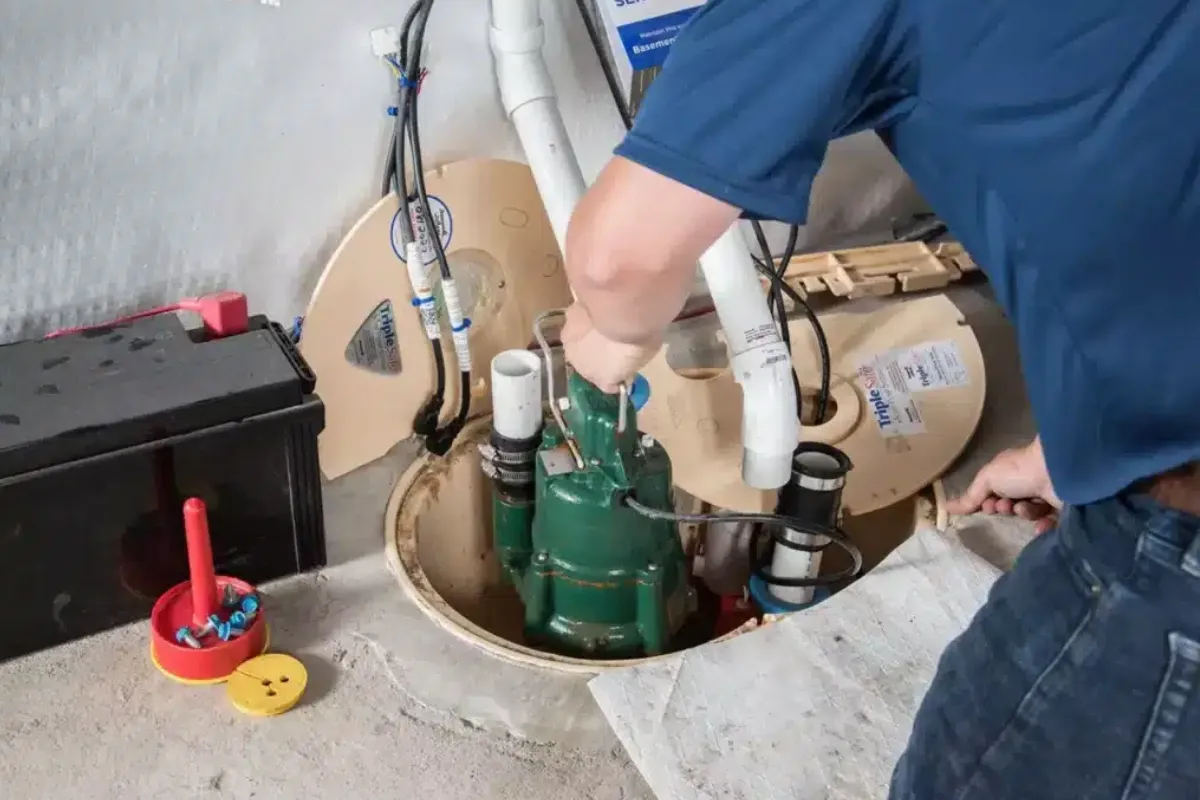
Compare sump pump replacement costs, backup pump options and ways to pay for protecting your basement from water damage.
Page last reviewed: October 29, 2026 · By the Home Repair Financing editorial team
A sump pump that stops working can let water into your basement during the next heavy rain, so it's worth replacing quickly. Sump pump replacement usually costs a few hundred to a couple thousand dollars. Most homeowners pay from savings, and sump pump replacement financing can be as simple as a credit card, a plumber's payment plan or a small personal loan.
This guide covers the signs a pump is failing, when a repair is enough, what a replacement and battery backup cost, and what insurance will and won't pay for. It also shows what a small loan would cost each month.
Key Takeaways
You can pay for a sump pump replacement with savings, a credit card, a payment plan from your plumber or waterproofing company, or a small personal loan. Because the bill is usually modest, the goal is to avoid paying more in interest than you need to.
| Option | Good fit when | Watch out for |
|---|---|---|
| 0% intro APR credit card | You can pay the bill off before the intro period ends | Any balance left after the intro period is charged the card's regular rate. |
| Plumber or contractor payment plan | The company offers a true 0% or low-rate plan with a few months to pay | Some promos use deferred interest, which can charge interest back to the start if you miss the payoff deadline. |
| Unsecured personal loan | You're adding a backup pump or other drainage work and want a fixed payment | Some lenders have minimum loan amounts. An origination fee may be taken out of the loan, so you receive less than you borrow. |
| Home equity loan or home equity line of credit (HELOC) | The pump is part of a much larger basement or drainage project | Your home is collateral, and closing costs can outweigh the savings on a small bill. |
For a bill of a few hundred dollars, a card you can pay off quickly often costs less than a loan with fees. Our guide to a personal loan vs. a credit card walks through that choice.
If water is already rising in your basement, think about safety before the pump. Don't touch electrical equipment if it's wet or if you're standing in water, and turn off the electricity only if it's safe to do so, Ready.gov advises. If you can't safely reach the panel, call your utility or an electrician.
If the basement is dry, check that the pump is plugged in and its breaker hasn't tripped. A float switch, the part that turns the pump on as water rises, can jam against the side of the pit. InterNACHI, a home inspector group, says you can test a pump by pouring water into the pit to see whether it turns on and pumps the water out. Don't reach into the pit with your hands.
If rain is coming and the pump won't run, ask a plumber about same-day replacement and whether they charge more for emergency calls. A rented or borrowed utility pump can help in the meantime.
HomeAdvisor puts the average sump pump repair at about $529, with most people paying $309 to $754. For a fairly new pump, or one still under warranty, a repair often makes sense. Here's what common repairs cost.
| Repair | Typical cost | What it usually means |
|---|---|---|
| Float switch repair | $75 to $125 | A common fix when the pump won't turn on or won't shut off |
| Impeller repair (the spinning part that moves water) | $100 to $225 | Often caused by debris in the pit |
| Discharge pipe repair | $125 to $300 | A cracked, clogged or frozen line can make the pump work harder |
| Backup battery replacement | $250 to $500 | Batteries wear out and can't be repaired |
| Motor replacement | $250 to $500 | On an older pump, often the point where a new pump makes more sense |
Source: HomeAdvisor national repair estimates. Prices vary by region and pump type.
A sump pump lasts about 10 years with good maintenance, and pedestal pumps tend to outlast submersible ones, according to HomeAdvisor. A simple rule of thumb: repair a switch or pipe on a younger pump, but replace a pump that's about 10 years old, breaks down often or needs a new motor.
Watch for warning signs before it fails. HomeAdvisor lists loud rattling, constant cycling, shuddering, musty smells, higher electric bills and visible rust.
HomeAdvisor puts the average cost to replace a sump pump at about $1,353, with most homeowners paying $645 to $2,102. A straight swap, where the pit and discharge line are already in place, usually costs less than a new installation that needs digging.
| Cost factor | What to know |
|---|---|
| Pump type | Pedestal pumps sit above the pit, while submersible pumps sit down in the water. Pedestal pumps tend to last longer. |
| Labor | About $45 to $200 an hour, and tight crawl spaces can take longer |
| Check valve | Keeps pumped water from flowing back into the pit, so the pump doesn't work harder than it should |
| High-water alarm | Warns you when water rises too high, and some send alerts to your phone |
| Discharge line | Should carry water well away from the house, not back toward the foundation |
Sources: HomeAdvisor and InterNACHI. Ask for an itemized quote that lists each part.
InterNACHI says pumped water should discharge at least 20 feet from the house and shouldn't drain back toward it. If yours empties next to the foundation, ask about extending the line while the plumber is there. If water keeps getting into the basement even with a working pump, the problem may be bigger than the pump. Our basement waterproofing financing guide covers drains, sealing and full waterproofing systems.
For many homes, yes. A sump pump runs on electricity, and power outages are most likely during heavy rain and floods, exactly when the pump is needed, InterNACHI notes. A battery backup is a second pump that runs off a battery when the power goes out or the main pump fails.
How long it runs depends on how much water comes in. One manufacturer, Basement Watchdog, rates its systems at about 40 to 80 hours on a full battery, assuming the pump runs about 10% of the time. Heavy inflow drains the battery faster. Some backup systems also sound an alarm when the battery or pump needs attention.
Plan for upkeep. HomeAdvisor puts a replacement backup battery at $250 to $500, and a battery that's never checked may not work when you need it. Adding a backup during a replacement can save a second service call, which is one reason some owners finance both together.
Usually not without an add-on. A standard homeowners policy typically doesn't pay for water damage from a failed or overflowing sump pump, NerdWallet explains. Water backup coverage, an optional endorsement added to your policy, can pay to clean up and repair that damage.
Check your policy before you need it, and ask your agent what a higher limit would cost. If you already had water damage, take photos and call your insurer before you throw anything out.
Your monthly payment depends on how much you borrow, your APR and how long you take to repay. The examples below show estimated payments for common sump pump jobs at three example APRs.
| Loan amount (3-year term) | At 12% APR | At 20% APR | At 28% APR |
|---|---|---|---|
| $1,000 | $33/mo, $196 interest | $37/mo, $338 interest | $41/mo, $489 interest |
| $2,000 | $66/mo, $391 interest | $74/mo, $676 interest | $83/mo, $978 interest |
| $3,500 | $116/mo, $685 interest | $130/mo, $1,183 interest | $145/mo, $1,712 interest |
These are example APRs to show how your rate changes the cost, not current offers. Personal loan APRs vary widely by lender and credit. Examples assume a fixed rate and no fees, rounded to the nearest dollar, and an origination fee would raise your actual cost.
On a bill this size, a fee can add a lot to the cost, so compare the APR, which includes fees, not just the interest rate. Our credit score requirements guide explains what affects the rate you're offered.
Use the calculator below to estimate your monthly payment and total interest. Enter the amount you plan to borrow, an estimated APR and a repayment term. Your actual loan offer may include different rates or fees.
Your Estimate
Monthly Payment
This calculator gives estimates only. It isn't a loan offer or a promise to lend. Your actual APR, loan amount and terms depend on the lender's review of your credit and income, and limits vary by state. The slider ranges are for estimating and don't reflect what lenders offer.
Powered by: Home Repair Financing
If a flooded basement could make your home unsafe, look for help quickly rather than going without a pump. Options are limited for a single appliance, but a few places are worth a call.
Our guides to home repair grants and low-income home repair loans list more programs.
Watch for "Guaranteed Approval"
Legitimate lenders won't promise or guarantee you a loan before you apply, the FTC warns, and no real lender will say that paying a fee guarantees you'll get one. If someone wants a fee up front before granting the loan, walk away. Learn more about how to spot home repair scams.
Related Resources
Most replacements cost a few hundred to a couple thousand dollars, including labor. A straight swap into an existing pit costs less than a new installation. Adding a battery backup or new discharge line raises the price.
Yes. A 0% intro APR card, a plumber's payment plan or a small personal loan can all work. Approval and rates depend on the lender and your credit.
There's no single minimum. Each lender sets its own requirements, and many personal loan lenders look for a score of about 580 or higher, according to Bankrate. A higher score usually means a lower rate.
Many sump pumps last about 10 years with regular maintenance. Pedestal pumps tend to last longer than submersible pumps. A pump that runs constantly or gets clogged often may wear out sooner.
Test it at least once a year, and before your rainy season. Pour water into the pit and make sure the pump turns on and empties it. Check that the discharge line is clear and drains away from the house.
Common signs include loud rattling, constant cycling, shaking, rust and musty smells. A pump that won't turn on, won't shut off or leaves water in the pit also needs attention. Have it checked before the next heavy rain.
A stuck float switch, a missing or failed check valve that lets pumped water flow back into the pit, or a high water table after heavy rain are common causes. A pump that runs nonstop wears out faster and raises your electric bill. If it keeps cycling in dry weather, have a plumber check it.
Generally no. Water backup coverage pays for damage caused by a failed pump, not for the pump itself. The pump's own warranty, a home warranty or equipment breakdown coverage may cover the device.
It's often a good time to do both. The plumber is already working on the pit, and a backup keeps water moving during power outages. Ask for separate prices so you can decide.
We use cost guides, manufacturer guidance, home inspection resources and government sources to explain sump pump costs and financing. Cost estimates are national averages and vary by home and region. Our payment examples are estimates, not loan offers. Rates, insurance terms and program rules can change.
See what loan options may be available for your sump pump replacement. It's free to submit a request, and you don't have to accept any offer. If you're matched, a participating lender may contact you directly and will set its own eligibility, rates, fees and funding time.
This page was written with the help of AI tools and reviewed and fact-checked by the Home Repair Financing editorial team.