
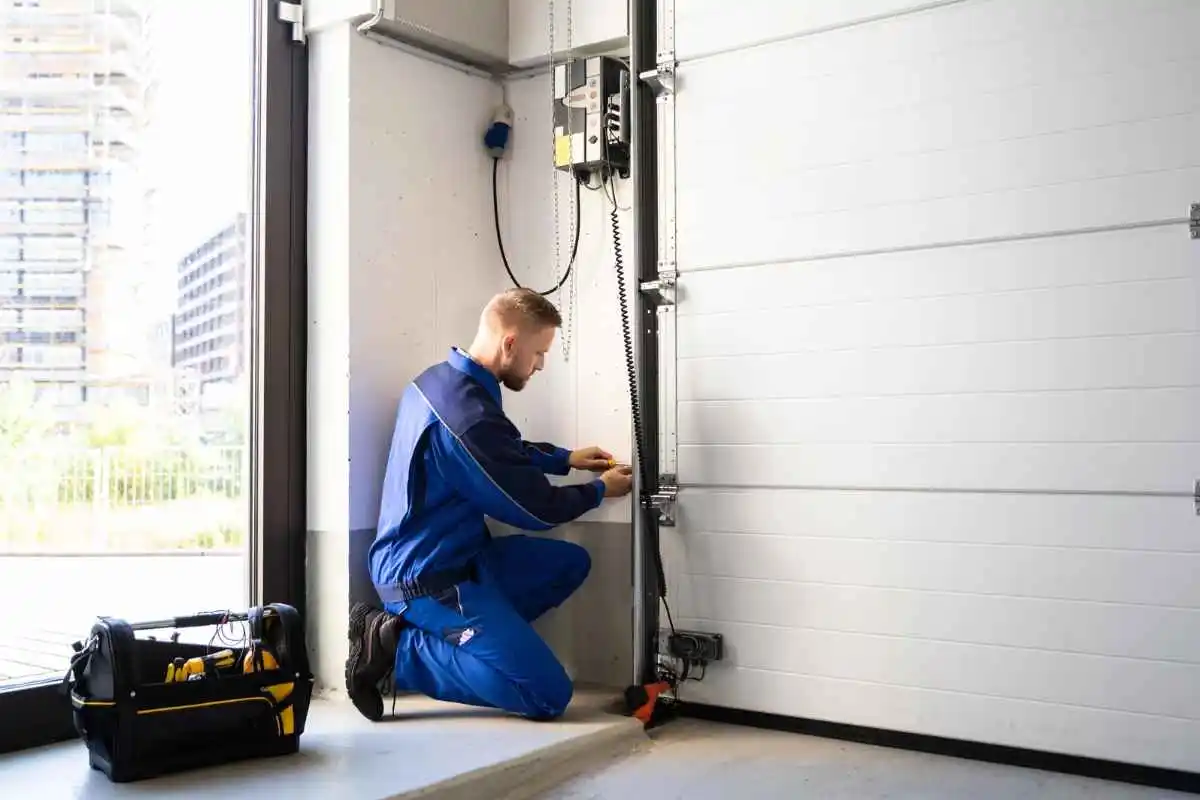
Need a garage door repair or replacement? Compare typical costs, financing options and payment plans before deciding how to pay.
Page last reviewed: October 29, 2026 · By the Home Repair Financing editorial team
A broken spring or a dented panel can leave your car stuck inside and your house less secure. Most garage door repairs cost a few hundred dollars, while a new door can run into the thousands. For garage door financing, common choices include a personal loan, a payment plan from the installer or a credit card for smaller bills.
Before you borrow, it helps to know whether your door needs a part or a full replacement, what a fair price looks like and which repairs you shouldn't try yourself. This guide covers costs, safety, insurance and how to compare financing.
Key Takeaways
You can pay for a garage door repair or replacement with a personal loan, financing from the installer, a credit card or, for larger projects, home equity. The best fit depends on the size of the bill, your credit and how quickly you can pay it off.
| Option | Good fit when | Watch out for |
|---|---|---|
| Unsecured personal loan | You're replacing the door and want a fixed payment without using your home as collateral | Rates and approval depend on the lender and your credit. An origination fee may be taken out of the loan, so you receive less than you borrow. |
| Installer payment plan | The company offers a true 0% APR or low rate you can pay off on time | Some promos use deferred interest, which can charge interest back to the start if you miss the payoff deadline. Compare the cash price with the financed price. |
| 0% intro APR credit card | The job is a repair, like a spring or opener, that you can pay off before the intro period ends | Any balance left after the intro period is charged the card's regular rate. |
| Home equity loan or home equity line of credit (HELOC) | The garage door is part of a bigger project and you have equity | Your home is collateral, and closing costs can outweigh the savings on a small job. |
For a repair of a few hundred dollars, savings or a card you can pay off quickly usually costs less than a loan. A personal loan makes more sense for a full replacement you'll repay over a few years. If your installer offers a payment plan, see how contractor financing compares with a personal loan before you sign.
Most garage door problems come from one worn part, not the whole door. A door that won't open often has a broken spring or a failed opener, and both can be fixed. HomeAdvisor puts the average garage door repair at about $264, with most people paying $155 to $378.
| Repair | Typical cost | What it usually means |
|---|---|---|
| Sensor realignment (the "photo eyes" near the floor) | $150 to $250 | A simple fix when the door reverses for no reason |
| Cables | $100 to $400 | Worn or frayed cables can snap, so replace them soon |
| Springs | $180 to $350 | The most common reason a door won't lift |
| Opener | $100 to $500 | Repairing the motor unit that lifts the door |
| Track | $5 to $400 | Ranges from a quick adjustment to a new section |
| Panel | $250 to $1,000 | Worth it for one damaged section, if a matching panel is still made |
Source: HomeAdvisor national cost estimates. Labor is often a large share of the bill, and prices vary by region and door type.
HomeAdvisor suggests repairing minor problems, such as a faulty opener, one damaged panel or worn rollers. It recommends replacement when the door is badly warped, needs frequent service or has several parts failing at once. In those cases, paying for one repair after another often costs more than a new door.
Age matters too. HomeAdvisor says most garage doors last 15 to 30 years, with steel doors typically lasting 15 to 20 years and wood doors 20 to 30. If your door is near the end of that range and needs a major repair, get a replacement quote to compare.
HomeAdvisor puts the average garage door replacement at about $1,500. Size and material drive most of the price. A single door for a one-car garage costs far less than a double door or a custom wood door.
| Door setup | Typical installed cost |
|---|---|
| One-car garage, single door (8 to 12 feet wide) | $500 to $2,500 |
| Two-car garage, single door (12 to 18 feet wide) | $800 to $4,000 |
| Two-car garage, two single doors | $1,100 to $5,000 |
Source: HomeAdvisor replacement costs, including labor and materials.
| Material | Typical installed cost |
|---|---|
| Aluminum | $500 to $2,000 |
| Steel | $500 to $3,000 |
| Vinyl | $700 to $2,100 |
| Fiberglass | $1,400 to $3,000 |
| Faux wood or composite | $800 to $6,100 |
| Wood | $1,000 to $10,000 |
Source: HomeAdvisor. Insulation, windows and custom styles add to the price.
Your quote may also include a few extras. HomeAdvisor estimates $40 to $130 to remove the old door and $220 to $520 to install a garage door opener. Ask for an itemized quote so you can see whether you're paying for a new opener you may not need.
Garage door springs do the heavy lifting. They're wound or stretched under high tension to balance the weight of the door, and that stored force can cause serious injury if a spring or cable lets go while you work on it. The Door and Access Systems Manufacturers Association (DASMA) calls springs arguably the most dangerous part of a garage door and says spring systems should be repaired only by trained professionals.
DASMA gives the same advice for lift cables and the bottom brackets the cables attach to. If a spring breaks, don't try to force the door open or lift it by hand, HomeAdvisor advises. Leave it closed and call a technician. Since a spring replacement usually costs a few hundred dollars, it's a repair worth paying a pro for.
Older openers can be a hazard too. A federal safety standard, first issued in 1991, requires automatic garage door openers to reverse when the door hits an obstruction and to include a second safety device, such as photo-eye sensors, according to the Consumer Product Safety Commission. If your opener doesn't reverse or has no sensors, replacing it is a safety repair, not an upgrade.
It depends on the cause. Homeowners insurance is built for sudden damage from covered events, like a storm, fire or vandalism. It won't pay for a door that wore out with age or failed from lack of maintenance, MoneyGeek explains, so a broken spring from normal use usually isn't covered.
Backing into your own garage door is a common case. Your auto collision coverage pays for the car, while damage you accidentally cause to your own garage door will typically fall under your homeowners policy, Plymouth Rock says. If someone else hits your door, their auto liability coverage should pay. Compare the repair cost with your deductible before you file a claim.
Your monthly payment depends on how much you borrow, your APR and how long you take to repay. Garage door jobs are usually small, so the examples below use a 3-year term at three example APRs.
| Loan amount (3-year term) | At 12% APR | At 20% APR | At 28% APR |
|---|---|---|---|
| $1,500 | $50/mo, $294 interest | $56/mo, $507 interest | $62/mo, $734 interest |
| $3,000 | $100/mo, $587 interest | $111/mo, $1,014 interest | $124/mo, $1,467 interest |
| $5,000 | $166/mo, $979 interest | $186/mo, $1,689 interest | $207/mo, $2,445 interest |
These are example APRs to show how your rate changes the cost, not current offers. Personal loan APRs vary widely by lender and credit. Examples assume a fixed rate and no fees, rounded to the nearest dollar, and an origination fee would raise your actual cost.
Some lenders have minimum loan amounts, so a small repair may not qualify for a personal loan at all. Our credit score guides explain what borrowers with scores around 600 or 700 can expect.
Use the calculator below to estimate your monthly payment and total interest. Enter the amount you plan to borrow, an estimated APR and a repayment term. Your actual loan offer may include different rates or fees.
Your Estimate
Monthly Payment
This calculator gives estimates only. It isn't a loan offer or a promise to lend. Your actual APR, loan amount and terms depend on the lender's review of your credit and income, and limits vary by state. The slider ranges are for estimating and don't reflect what lenders offer.
Powered by: Home Repair Financing
Grants rarely pay for a garage door on its own, so the best savings usually come from a smaller job. A door that won't close or a broken spring still needs fixing soon, since it can leave your home less secure and the door unsafe to use.
If you're an older adult, have a disability or have a low income and need wider repairs, local programs may help. Our guide to home repair grants explains where to look.
Watch for "Guaranteed Approval"
Legitimate lenders won't promise or guarantee you a loan before you apply, the FTC warns, and no real lender will say that paying a fee guarantees you'll get one. If someone wants a fee up front before granting the loan, walk away. Learn more about how to spot home repair scams.
Related Resources
Yes, in most cases. Common options include a personal loan, a payment plan from the installer and a 0% intro APR credit card for smaller bills. Approval and rates depend on the lender and your credit.
It may be possible, but expect a higher APR and fewer choices. Some lenders and installer plans accept lower scores, and each sets its own rules. For a small repair, paying from savings or fixing only the failed part may cost less than a high-rate loan.
Often, if only one part failed. Springs, cables, openers and single panels can usually be replaced. If the door is badly warped or keeps needing repairs, a new door may cost less over time.
No. Without a working spring, the door's full weight can drop suddenly, and the other spring and cables may be under dangerous tension. Leave the door closed and call a trained technician.
It isn't recommended. Springs hold enough tension to cause serious injury, and door industry groups say they should be repaired only by trained professionals. A spring replacement usually costs a few hundred dollars.
Often, yes, under your homeowners policy rather than your auto policy, which covers damage to the car. Your deductible applies, so compare it with the repair cost before filing. Wear and tear isn't covered.
Not always. If your opener reverses when it hits an object and has working safety sensors, it may be able to stay. Ask the installer whether it can handle the new door's weight and size.
There's no single minimum. Each lender sets its own requirements, and many personal loan lenders look for a score of about 580 or higher, according to Bankrate. A higher score usually means a lower rate.
Many garage doors last 15 to 30 years, depending on the material and how much you use the door. Springs wear out much sooner, so plan for at least one spring replacement during the door's life.
We use cost guides, industry safety guidance, insurance resources and government sources to explain garage door costs and financing. Cost estimates are national averages and vary by home and region. Our payment examples are estimates, not loan offers. Rates and rules can change.
See what loan options may be available for your garage door repair or replacement. It's free to submit a request, and you don't have to accept any offer. If you're matched, a participating lender may contact you directly and will set its own eligibility, rates, fees and funding time.
This page was written with the help of AI tools and reviewed and fact-checked by the Home Repair Financing editorial team.