
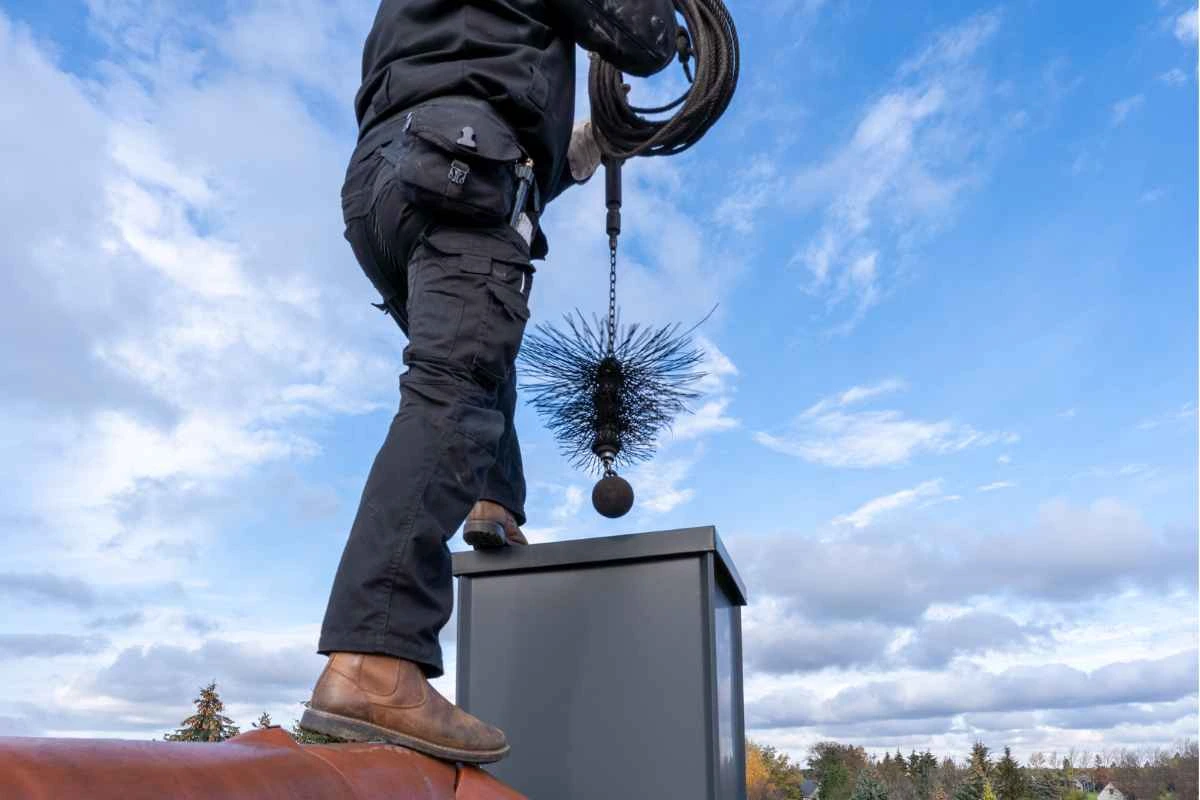
Explore chimney repair costs for liners, flashing and masonry, plus ways to finance necessary repairs without overlooking safety.
Page last reviewed: October 29, 2026 · By the Home Repair Financing editorial team
Many chimney repairs cost a few hundred dollars, but a new liner, crown or partial rebuild can run into the thousands. If you can't cover the bill from savings, chimney repair financing options include a personal loan, a payment plan from the chimney company, a 0% intro APR credit card for small bills or, for bigger jobs, a home equity loan or line of credit.
A damaged chimney isn't only a cost problem. It can let fire reach your home's framing or send carbon monoxide indoors. This guide covers when to get an inspection, which problems are urgent, what common repairs cost, what insurance pays for and how to finance the work.
Key Takeaways
You can finance chimney repair with a personal loan, a chimney company's payment plan, a credit card or home equity. The best fit depends on the size of the bill, your credit and whether the chimney is safe to use right now.
| Option | Good fit when | Watch out for |
|---|---|---|
| Unsecured personal loan | You need a liner, crown or rebuild and want a fixed monthly payment | Rates and approval depend on the lender and your credit. An origination fee may be taken out of the loan, so you receive less than you borrow. |
| Chimney company payment plan | The company offers a 0% or low-rate plan you can pay off on time | Some promos use deferred interest, which can charge interest back to the start if you miss the payoff deadline. Compare the cash price with the financed price. |
| 0% intro APR credit card | The repair is small, like a cap, flashing or crown seal, and you can pay it off during the intro period | Any balance left after the intro period is charged the card's regular rate. |
| Home equity loan or home equity line of credit (HELOC) | You have equity and are pairing a chimney rebuild with roof or other exterior work | Your home is collateral. HELOC rates are commonly variable, and closing takes longer than a personal loan. |
Chimney work often lands on the same bill as a roof job, since flashing ties the chimney to the roof. If your contractor offers financing, get the price in writing both ways before you decide. Our comparison of contractor financing vs. a personal loan explains what to look for in a payment plan.
Once a year. The fire safety standard NFPA 211 says chimneys, fireplaces and vents "shall be inspected at least once a year," with cleaning and repairs done if needed, according to the Chimney Safety Institute of America (CSIA). The U.S. Fire Administration gives the same advice: have chimneys and vents cleaned and inspected each year by a professional.
That applies even if you rarely light a fire. Animals can nest in a flue, and a chimney that vents a gas furnace or water heater still needs a yearly check, CSIA says. An inspection before you finance anything also tells you exactly what's wrong, so you don't borrow for the wrong repair.
The CSIA describes three levels of inspection. Knowing which one you need helps you understand the quote.
| Inspection level | What it covers | When it's used |
|---|---|---|
| Level 1 | The easy-to-reach parts of the chimney, appliance and connection | Routine yearly checks when nothing about the system has changed |
| Level 2 | Everything in Level 1, plus the attic, crawl space or basement and a video scan of the flue | After a chimney fire, earthquake or severe storm, when you sell or buy the home, or when you change the system or appliance |
| Level 3 | Removes parts of the chimney or building to reach hidden areas | When an earlier inspection points to a serious hidden hazard |
Source: CSIA, the three levels of chimney inspection.
A basic inspection costs about $100, and a detailed camera or structural inspection runs about $300 to $600 or more, according to This Old House. A yearly sweep costs about $80 to $200, but a chimney that hasn't been cleaned in years can cost up to $800.
It can be. The two main risks are chimney fires and carbon monoxide (CO), a gas you can't see or smell. Both are reasons to repair a damaged chimney promptly rather than wait.
Chimney fires. Burning wood leaves creosote, a tar-like deposit, inside the flue. Creosote is highly combustible, and enough buildup can catch fire, CSIA explains. Signs include loud cracking and popping, dense smoke, an intense hot smell and a low rumbling sound. Some chimney fires burn slowly and go unnoticed until a later inspection.
A chimney fire's heat can melt mortar, crack flue tiles, collapse liners and damage the outside masonry. Those cracks can give flames a path to your home's wood framing. A factory-built metal chimney damaged by a fire shouldn't be used again and must be replaced, CSIA says.
Carbon monoxide. A blocked or cracked flue can push exhaust back into your home instead of venting it outside. The Consumer Product Safety Commission (CPSC) advises having flues and chimneys checked before each heating season for leaks and for blockage by creosote or debris.
If You Suspect a Chimney Fire or CO
If you think your chimney is on fire, get everyone out and call 911. If a CO alarm sounds or anyone has a headache, dizziness, nausea or confusion, treat it as possible CO poisoning. Get outside to fresh air right away and then call 911, as the CPSC advises. Don't use the fireplace or connected appliances again until a professional has inspected the chimney.
CPSC recommends CO alarms on every level of the home and outside sleeping areas. They're worth having whether or not you need a repair.
This Old House puts the average chimney repair at about $750, with a range of $250 to $13,300. Where you land depends on which part failed and whether it can be repaired or must be replaced. The table covers the most common jobs.
| Part or job | Repair | Replacement |
|---|---|---|
| Chimney cap (the cover that keeps rain and animals out) | $100 to $250 | $300 to $600 |
| Flashing (the metal seal where the chimney meets the roof) | $200 to $300 | $300 to $800 |
| Crown (the concrete top that sheds water off the masonry) | $750 to $1,000 | $1,000 to $3,000 |
| Flue liner (the inner lining that carries smoke and gases out) | $200 to $5,000 | $1,200 to $4,600 |
| Tuckpointing (replacing worn mortar between bricks) | $500 to $2,500 | Not applicable |
| Rebuilding the chimney | Not applicable | $500 to $8,000 |
Source: This Old House national cost estimates. Prices vary by region, chimney height, roof pitch and access.
Small problems often lead to big ones. A cracked crown or missing cap lets water into the masonry, which wears out mortar and bricks over time. Fixing those early is usually the cheapest repair you'll make.
If a leak around the chimney turns out to be failed flashing and the roof around it is also worn, our roof financing guide covers paying for both jobs. Labor also adds up. This Old House lists labor at about $50 to $150 an hour, plus a $50 to $100 service call fee.
Repair, rebuild or remove? If you don't use the fireplace and nothing else vents through the chimney, removing it may cost less than a full rebuild. This Old House puts removal down to the roofline at about $500 to $2,500, and full removal, including interior work, at about $2,500 to $7,500. Ask your contractor to price each option, and confirm no furnace or water heater uses the flue first.
Sometimes. A standard policy generally pays for sudden damage from a covered event, such as lightning, a fallen tree or a chimney that collapses under the weight of snow or ice, according to Policygenius. A chimney fire that wasn't caused by neglect may also be covered.
Damage from age, wear and tear, or poor maintenance usually isn't covered. An insurer may deny a chimney fire claim if creosote buildup from skipped cleanings caused it. That's another reason to keep records of your yearly inspections and sweeps.
If a storm or fire damaged your chimney, call your insurer before you sign a repair contract, and take photos first. Your policy's deductible still applies, so you may need to finance part of the cost even if a claim is approved.
Your monthly payment depends on how much you borrow, your APR and how long you take to repay. The examples below show estimated payments for common chimney repair costs at three example APRs.
| Loan amount (3-year term) | At 12% APR | At 20% APR | At 28% APR |
|---|---|---|---|
| $1,500 | $50/mo, $294 interest | $56/mo, $507 interest | $62/mo, $734 interest |
| $3,000 | $100/mo, $587 interest | $111/mo, $1,014 interest | $124/mo, $1,467 interest |
| $5,000 | $166/mo, $979 interest | $186/mo, $1,689 interest | $207/mo, $2,445 interest |
These are example APRs to show how your rate changes the cost, not current offers. Personal loan APRs vary widely by lender and credit. Examples assume a fixed rate and no fees, rounded to the nearest dollar, and an origination fee would raise your actual cost.
Your credit score has a big effect on the rate you're offered. Our guides for borrowers with scores around 580 or 650 explain what to expect. For a small chimney bill, see how a $3,000 home improvement loan works.
Use the calculator below to estimate your monthly payment and total interest. Enter the amount you plan to borrow, an estimated APR and a repayment term. Your actual loan offer may include different rates or fees.
Your Estimate
Monthly Payment
This calculator gives estimates only. It isn't a loan offer or a promise to lend. Your actual APR, loan amount and terms depend on the lender's review of your credit and income, and limits vary by state. The slider ranges are for estimating and don't reflect what lenders offer.
Powered by: Home Repair Financing
If you can't afford the repair and can't qualify for a loan, don't keep using a chimney that a professional has flagged as unsafe. Look for help and ask whether the work can be split up so the safety repair comes first.
Homeowners 62 and older can also see our guide to senior home repair loans for more programs. Program rules and funding vary by area, so ask your local housing agency what's available.
Watch for "Guaranteed Approval"
Legitimate lenders won't promise or guarantee you a loan before you apply, the FTC warns, and no real lender will say that paying a fee guarantees you'll get one. If someone wants a fee up front before granting the loan, walk away. Learn more about how to spot home repair scams.
Related Resources
It may be possible, but expect higher rates and fewer choices. Some lenders work with lower scores, and a cosigner or a smaller loan can help. For a small repair, a contractor payment plan or a few months of saving may cost less than a high-APR loan.
You can. Common options include a personal loan, a payment plan from the chimney company, a 0% intro APR credit card for small jobs and home equity for large projects. Approval and rates depend on the lender and your credit.
There's no single minimum. Each lender sets its own requirements, and many personal loan lenders look for a score of about 580 or higher, according to Bankrate. A higher score usually means a lower rate.
Common signs include crumbling mortar, loose or flaking bricks, a cracked crown, a missing or rusted cap and water stains near the chimney. Some damage, like a cracked flue liner, can't be seen from outside. A yearly inspection catches problems you can't spot yourself.
Small jobs, like replacing a cap, may be possible for an experienced DIYer, but roof work carries a real fall risk. Liner, flashing, crown and masonry work belong with a certified chimney professional. A mistake can create a fire or carbon monoxide hazard.
No, not until a professional checks it. Cracks in the liner can let heat and flames reach the wood framing around the chimney and can let exhaust leak into your home. Stop using the fireplace and schedule an inspection.
It can be either. Leaks often come from failed flashing where the chimney meets the roof, but a cracked crown, missing cap or worn mortar can also let water in. An inspection can find the source so you pay for the right repair.
It can cost less than a full rebuild if no furnace, water heater or other appliance vents through it. Removing just the part above the roofline is cheaper than full removal. Get quotes for repair, rebuild and removal before you decide.
Possibly. USDA repair loans and grants help eligible low-income homeowners in rural areas fix health and safety hazards, and some local programs help older or disabled homeowners. Availability varies, so contact your local housing agency.
We use cost guides, chimney safety organizations and government sources to explain chimney repair costs, safety and financing. Cost estimates are national averages and vary by home and region. Our payment examples are estimates, not loan offers. Rates and program rules can change.
See what loan options may be available for your chimney repair. It's free to submit a request, and you don't have to accept any offer. If you're matched, a participating lender may contact you directly and will set its own eligibility, rates, fees and funding time.
This page was written with the help of AI tools and reviewed and fact-checked by the Home Repair Financing editorial team.