
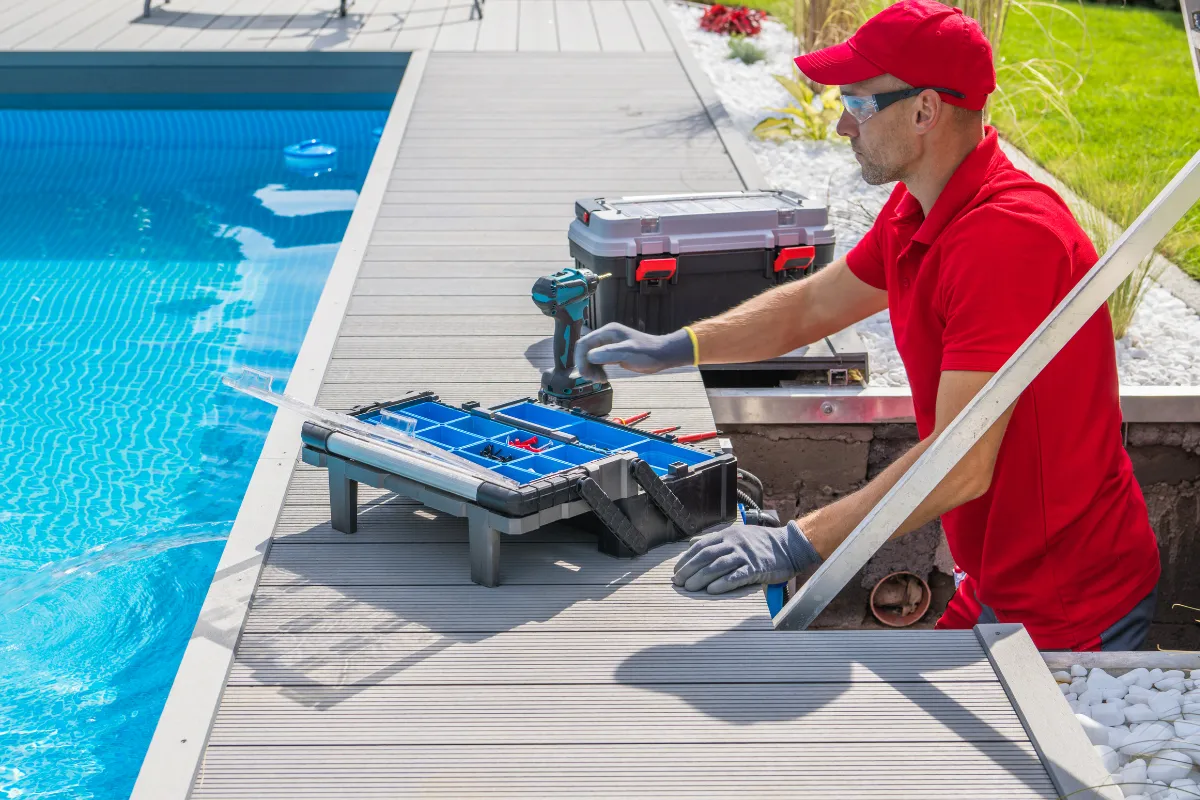
Compare swimming pool repair and resurfacing costs, personal loans and payment plans before choosing how to fund the work.
Page last reviewed: October 29, 2026 · By the Home Repair Financing editorial team
Most pool repairs, like a pump fix or a small leak, cost a few hundred dollars. Resurfacing is different, and it can run into five figures. You can pay with savings, or use pool repair financing such as a personal loan, a pool company payment plan, a credit card or home equity. Since a pool isn't usually an essential repair, it's worth comparing the full cost of borrowing before you commit.
This guide covers what common pool repairs cost, when resurfacing is due, whether to repair or replace a pump or heater, and which safety barriers to fix first. It also explains the downsides of financing a pool repair.
Key Takeaways
You can finance a pool repair with a personal loan, a payment plan from the pool company, a credit card or a home equity loan or line of credit. Smaller equipment repairs usually fit a card or savings. Resurfacing is where most homeowners consider a loan.
| Option | Good fit when | Watch out for |
|---|---|---|
| Unsecured personal loan | You're resurfacing or making several repairs and want a fixed payment without using your home as collateral | Rates and approval depend on the lender and your credit. An origination fee may be taken out of the loan, so you receive less than you borrow. |
| Pool company financing | The company offers a true 0% APR or low rate you can pay off on time | Some promos use deferred interest, which can charge interest back to the start if you miss the payoff deadline. Compare the cash price with the financed price. |
| 0% intro APR credit card | The repair is a pump, filter, heater part or small leak you can pay off before the intro period ends | Any balance left after the intro period is charged the card's regular rate. |
| Home equity loan or home equity line of credit (HELOC) | The pool repair is part of a larger project and you have plenty of equity | Your home is collateral. Missing payments on a pool repair could put your house at risk. |
Pool companies often bundle resurfacing with new tile, coping (the cap around the pool's edge) or equipment upgrades. Ask for itemized prices so you can decide what to finance and what to skip. Before you accept a company's plan, see how contractor financing compares with a personal loan.
Pool repair averages about $680, with a typical range of $238 to $1,134, according to Bob Vila, citing Angi data. Inground pool repairs usually cost more than above-ground repairs, and the type of problem matters most.
| Repair | Typical cost |
|---|---|
| Pump repair | $50 to $300 |
| Skimmer repair | $50 to $300 |
| Leak detection | $100 to $500 |
| Heater repair | $160 to $730 |
| Drain repair | $400 to $700 |
| Pump replacement | $700 to $1,300 |
| Filter replacement, installed | $1,500 to $2,000 |
| Leak repair | $10 to $3,500 |
Source: Bob Vila national cost estimates. Prices vary by region, pool type and equipment brand.
Leaks have the widest range because the fix depends on where the water is going. A small tear in a vinyl liner can be patched cheaply. A leak in an underground pipe or a crack in a concrete shell costs far more. Bob Vila puts large structural cracks at $4,000 to $5,000.
Don't ignore a leak. Every gallon you top off shows up on your water bill, and small leaks can grow. Paying for leak detection first helps you avoid paying for the wrong repair.
Resurfacing a concrete or gunite pool usually costs about $6,000 to $15,000 for a pool with about 1,000 square feet of surface, according to HomeGuide. The finish you choose drives both the price and how long it lasts.
| Finish | Typical cost (1,000 sq. ft.) | Typical lifespan |
|---|---|---|
| Paint | $1,000 to $2,000 | 5 to 7 years |
| Plaster | $6,000 to $8,000 | 7 to 12 years |
| Quartz plaster | $7,000 to $10,000 | 10 to 15 years |
| Pebble | $7,000 to $15,000 | 15 to 20 years or more |
| Tile | $8,000 to $30,000 or more | The most durable option |
Source: HomeGuide. Larger pools, extra tile work and repairs to the shell raise the price.
HomeGuide lists signs that a pool needs resurfacing, including flaking or peeling plaster, chips and cracks, stains that won't clean off, a rough surface and loose pebbles. Vinyl pools aren't resurfaced. They get a new liner instead, which usually costs much less than resurfacing concrete.
Think about cost per year, not just the total. A cheaper finish that wears out sooner may cost more over time, especially if you borrow for it more than once. If you plan to sell soon, a less expensive finish may make more sense.
Repair is usually the first step. Bob Vila puts pump repair at $50 to $300, compared with $700 to $1,300 to replace one, and heater repair at $160 to $730. Ask what failed. A motor seal or capacitor is a far smaller job than a burned-out motor.
If you do replace a pump, efficiency matters. A pool pump can be a home's second-largest energy user, according to ENERGY STAR. Certified variable-speed pumps can run at lower speeds, and cutting a pump's speed in half lets it use about one-eighth as much energy. ENERGY STAR says certified pumps can pay for themselves in less than two years.
A pool heater is often optional. If yours fails and the repair is costly, you can usually keep swimming in warm months while you save, instead of borrowing for a new heater right away. A pump and filter, on the other hand, keep the water clean and safe, so they're the higher priority.
Pool equipment runs on electricity near water, so new wiring or a panel upgrade may be part of a replacement. Our electrical repair financing guide covers those costs.
Some pool repairs can wait. Broken barriers can't. The federal Pool Safely campaign, run by the U.S. Consumer Product Safety Commission, recommends these protections:
Fix Broken Gates and Fences Now
A gate that doesn't latch or a gap in the fence is a safety problem, not a cosmetic one. These repairs usually cost far less than resurfacing, so pay for them first, even if the rest of the pool has to wait. Local codes often set their own barrier rules, so ask your building department what applies to you.
A pool repair is different from fixing a roof or a furnace. Your home can stay safe and livable without a working pool, so a loan for resurfacing deserves more scrutiny than a loan for an urgent repair. Ask yourself a few questions first.
If you decide to borrow, keep the term as short as you can afford. Interest adds up fast on a large balance, as the examples below show.
Your monthly payment depends on how much you borrow, your APR and how long you take to repay. The examples below show estimated payments for common pool repair and resurfacing budgets at three example APRs.
| Loan amount (5-year term) | At 12% APR | At 20% APR | At 28% APR |
|---|---|---|---|
| $3,000 | $67/mo, $1,004 interest | $79/mo, $1,769 interest | $93/mo, $2,604 interest |
| $8,000 | $178/mo, $2,677 interest | $212/mo, $4,717 interest | $249/mo, $6,945 interest |
| $15,000 | $334/mo, $5,020 interest | $397/mo, $8,844 interest | $467/mo, $13,022 interest |
These are example APRs to show how your rate changes the cost, not current offers. Personal loan APRs vary widely by lender and credit. Examples assume a fixed rate and no fees, rounded to the nearest dollar, and an origination fee would raise your actual cost.
At higher APRs, interest on a resurfacing loan can approach the cost of the job itself. For a typical resurfacing budget, see our $10,000 home improvement loan guide, and our 700 credit score page explains what stronger credit can mean for your rate.
Use the calculator below to estimate your monthly payment and total interest. Enter the amount you plan to borrow, an estimated APR and a repayment term. Your actual loan offer may include different rates or fees.
Your Estimate
Monthly Payment
This calculator gives estimates only. It isn't a loan offer or a promise to lend. Your actual APR, loan amount and terms depend on the lender's review of your credit and income, and limits vary by state. The slider ranges are for estimating and don't reflect what lenders offer.
Powered by: Home Repair Financing
Home repair grants and assistance programs generally focus on essential repairs, so they rarely pay for pools. If you can't afford a pool repair, these steps can lower the bill or buy time.
If you're also facing repairs your home can't go without, like a roof leak or no heat, put those first. Our home repair help guide covers programs for essential repairs.
Watch for "Guaranteed Approval"
Legitimate lenders won't promise or guarantee you a loan before you apply, the FTC warns, and no real lender will say that paying a fee guarantees you'll get one. If someone wants a fee up front before granting the loan, walk away. Learn more about how to spot home repair scams.
Related Resources
No. Vinyl pools aren't resurfaced like concrete or gunite pools. When the liner wears out or tears beyond patching, it gets replaced, which usually costs much less than resurfacing a concrete pool.
Yes. A personal loan, a pool company payment plan or a home equity loan can cover resurfacing. Because a pool isn't essential, compare the total cost carefully and be cautious about using your home as collateral.
It depends on the finish. Plaster often lasts about 7 to 12 years, while pebble finishes can last 15 years or more. Peeling, rough spots, cracks and stains that won't clean off are signs it's time.
Often, yes, if the pump, filter and safety barriers work. Worn plaster or a broken heater usually doesn't make a pool unsafe to swim in. Don't use it if the water can't be kept clean, a drain cover is broken or missing, or a gate or fence is damaged.
Often, yes. Running a pump at lower speed uses far less energy, and ENERGY STAR says certified pumps can pay for themselves in less than two years. Savings depend on how long you run the pump and your electric rates.
It ranges from a cheap patch to thousands of dollars. A small liner tear is inexpensive, while leaks in underground plumbing or the pool shell cost much more. Leak detection helps pinpoint the problem before you pay for a repair.
Usually only for sudden damage from a covered event, such as a storm or a falling tree. Wear and tear, old finishes and failing equipment are generally not covered. Check your policy for the details.
Only if your plan specifically includes pool and spa equipment. Even then, these plans can have limits, service fees and exclusions, so read the contract before you count on it.
There's no single minimum. Each lender sets its own requirements, and many personal loan lenders look for a score of about 580 or higher, according to Bankrate. A higher score usually means a lower rate.
Generally, no. Home repair grants focus on health, safety and essential systems, not pools. Lower-cost finishes, staged repairs and multiple quotes are usually the best ways to reduce the bill.
We use cost guides, federal safety guidance and consumer finance sources to explain pool repair costs and financing. Cost estimates are national averages and vary by pool and region. Our payment examples are estimates, not loan offers. Rates and program rules can change.
See what loan options may be available for your pool repair or resurfacing. It's free to submit a request, and you don't have to accept any offer. If you're matched, a participating lender may contact you directly and will set its own eligibility, rates, fees and funding time.
This page was written with the help of AI tools and reviewed and fact-checked by the Home Repair Financing editorial team.