
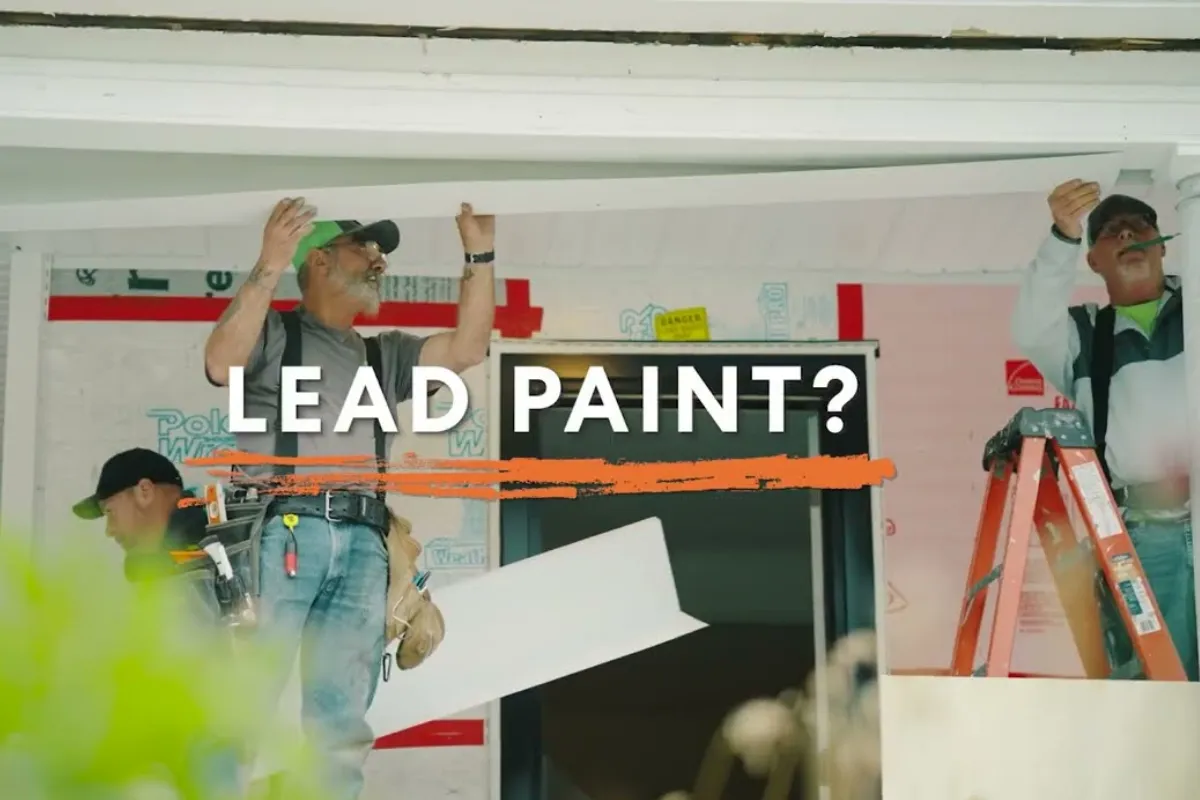
Explore lead paint testing and removal costs, potential assistance programs and financing options for safer home repairs.
Page last reviewed: October 29, 2026 · By the Home Repair Financing editorial team
If your home was built before 1978, it may have lead-based paint, and fixing it can cost anywhere from a few hundred dollars for a small area to tens of thousands for a whole house. You can pay through a local lead hazard grant program or a state lead loan, or use lead paint removal financing such as a personal loan, contractor financing or home equity. If young children live in or visit the home, check for free or low-cost local programs first, since many are aimed at those families.
This guide explains how to find out whether you have a lead hazard, the difference between full abatement and lead-safe repairs, what each method costs and how to protect children while work is done. It also covers grants and low-cost loans that may pay for some or all of the job.
Key Takeaways
Many cities, counties and states run lead hazard programs, so it's worth checking them first. If you don't qualify or the wait is too long, these are the main ways to pay.
| Option | Good fit when | Watch out for |
|---|---|---|
| Local lead hazard program (grant or forgivable loan) | Your income is within local limits and a young child or pregnant person lives in or visits the home | Funding is limited, there may be a waiting list, and you may need to stay in the home for a set time after the work. |
| State lead paint loan | Your state offers low- or no-interest loans for lead removal | Only some states have one, with income limits and approved contractors. |
| Unsecured personal loan | You don't qualify for help, or you're fixing a few windows or rooms | Rates and approval depend on the lender and your credit. An origination fee may be taken out of the loan, so you receive less than you borrow. |
| Home equity loan or home equity line of credit (HELOC) | You're abating the whole house or combining it with a larger renovation | Your home is collateral, and closing can take weeks. |
| Contractor financing | A certified contractor offers a true 0% or low-rate plan | Some promos use deferred interest, which can charge interest back to the start if you miss the payoff deadline. |
Whole-house abatement can reach the range where home equity becomes worth a look. Our guide to a home equity loan vs. a HELOC explains how the two differ if you go that route.
Age is the first clue. Homes built before 1978, when lead-based paint was banned for homes, probably contain it, the CDC says. The EPA estimates about three-quarters of pre-1978 homes still have some lead paint.
But lead paint isn't always a hazard. Paint in good condition usually isn't a problem, according to the EPA. It becomes one when it peels, chips or cracks, or when doors and windows rub painted surfaces and create dust. The EPA recommends hiring a certified lead inspector or risk assessor to find out what you have.
| Service | What it tells you | Typical cost |
|---|---|---|
| Lead inspection | Which painted surfaces contain lead, often using a handheld X-ray scanner | $200 to $400 |
| Risk assessment | Where lead paint, dust or soil is an actual hazard now, and how to fix it | $800 to $2,000 |
Source: Bob Vila cost estimates. Local lead programs may cover testing for eligible households.
A risk assessment is often the better buy before borrowing. It points to the specific hazards to fix, so you don't pay to strip paint that's in good shape. If you have young children, ask their doctor about a blood lead test too. The CDC says a blood test is the best way to tell if a child has been exposed.
The EPA treats these as two different kinds of work with different certifications. Abatement is work designed to permanently get rid of lead paint hazards. Lead-safe renovation is ordinary repair, painting or remodeling done with rules that keep lead dust contained.
For lead-safe renovation, the EPA's Renovation, Repair and Painting (RRP) rule applies to paid work in pre-1978 homes. Contractors must be certified, follow lead-safe work practices and give you the EPA's Renovate Right pamphlet before work starts, according to the EPA's Renovate Right guide. The rule kicks in for jobs that disturb more than 6 square feet of paint in a room, more than 20 square feet outside, or any window replacement.
| Approach | When it fits | Who does it |
|---|---|---|
| Encapsulation (a special coating that seals paint in place) | Paint is intact but you want a barrier, such as on walls and trim that don't rub | A certified contractor, using a product made for lead |
| Enclosure (covering surfaces with new drywall or siding) | Large surfaces in fair shape | A certified contractor |
| Component replacement | Windows, doors or trim that rub and create dust | A certified contractor; any window replacement falls under the RRP rule |
| Full abatement (removal) | A child has a high blood lead level, or a program or order requires permanent fixes | A certified abatement firm, often after a risk assessment |
Sources: EPA RRP program and Renovate Right. Ask your risk assessor which approach fits each surface.
Certified contractors can't use certain dangerous methods. The EPA bans open-flame burning, power sanding or grinding without a shroud and HEPA vacuum attachment, and heat guns above 1100°F. If a contractor plans to do any of these, find another one. You can look up certified firms with the EPA's firm location search.
Windows rub every time they open and close, and the EPA flags friction surfaces like windows and doors as a common lead dust hazard, so replacing them can be a practical fix. If you're weighing that, our window and door financing guide covers replacement costs and window loans.
The price depends on how much paint you treat and which method you use. Bob Vila puts a typical project at $1,445 to $5,412, while Fixr, which prices larger whole-house jobs, puts most at $10,000 to $30,000. The per-square-foot rates below help you estimate your own job.
| Method | Typical cost |
|---|---|
| Encapsulation | $1 to $4 per sq. ft. |
| Enclosure | $6 to $12 per sq. ft. |
| Removal | $8 to $17 per sq. ft. |
| Component replacement (windows, doors, trim) | $1,000 to $15,000 per project |
Source: Fixr national cost estimates. Bob Vila lists encapsulation at $4 to $8 per sq. ft., so local quotes matter.
Size adds up quickly with removal. Fixr estimates removing lead paint from 200 square feet costs $1,600 to $3,400, while 1,000 square feet runs $8,000 to $17,000. That's why many homeowners treat the worst areas, like windows and peeling exterior trim, and seal the rest.
| Other cost | Typical cost |
|---|---|
| Disposal | $3 to $5 per sq. ft. |
| Repainting after removal | $2 to $6 per sq. ft. |
| Carpentry repairs | $70 to $95 per hour, plus materials |
Sources: Fixr for disposal and carpentry; Bob Vila for repainting.
Don't count on insurance. Many homeowners policies exclude lead paint removal, though some may cover it, Bob Vila notes, so check your policy and ask your insurer before work starts.
Children face the most risk because they crawl, play on floors and put things in their mouths. No safe blood lead level in children has been identified, and even low levels can affect learning and attention, according to the CDC. Lead can affect a child's brain and nervous system, leading to lower IQ, learning disabilities and behavior problems, the EPA says.
If a child already has a high blood lead level, call your local health department. Talk with your child's doctor and your local health department about next steps and local lead programs. Fixing the hazard shouldn't wait until you can borrow.
Your monthly payment depends on how much you borrow, your APR and how long you take to repay. The examples below cover a range from a few windows to a larger multi-room job at three example APRs.
| Loan amount (5-year term) | At 12% APR | At 20% APR | At 28% APR |
|---|---|---|---|
| $5,000 | $111/mo, $1,673 interest | $132/mo, $2,948 interest | $156/mo, $4,341 interest |
| $10,000 | $222/mo, $3,347 interest | $265/mo, $5,896 interest | $311/mo, $8,681 interest |
| $20,000 | $445/mo, $6,693 interest | $530/mo, $11,793 interest | $623/mo, $17,363 interest |
These are example APRs to show how your rate changes the cost, not current offers. Personal loan APRs vary widely by lender and credit. Examples assume a fixed rate and no fees, rounded to the nearest dollar, and an origination fee would raise your actual cost.
At higher APRs, the interest on a larger job can approach the cost of the work itself, which is another reason to check grant programs first. Our credit score requirements guide explains what affects the rate you're offered.
Use the calculator below to estimate your monthly payment and total interest. Enter the amount you plan to borrow, an estimated APR and a repayment term. Your actual loan offer may include different rates or fees.
Your Estimate
Monthly Payment
This calculator gives estimates only. It isn't a loan offer or a promise to lend. Your actual APR, loan amount and terms depend on the lender's review of your credit and income, and limits vary by state. The slider ranges are for estimating and don't reflect what lenders offer.
Powered by: Home Repair Financing
Yes, in many areas, though you usually apply through a local program rather than to the federal government. Rules, funding and waiting lists vary, so contact your city or county health or housing department to see what's open.
Some programs, like the Ohio example, require you to keep living in the home, or keep a rental available to lower-income tenants, for a few years after the work. Read the agreement so you know what happens if you sell or move early.
Watch for "Guaranteed Approval"
Legitimate lenders won't promise or guarantee you a loan before you apply, the FTC warns, and no real lender will say that paying a fee guarantees you'll get one. If someone wants a fee up front before granting the loan, walk away. Learn more about how to spot home repair scams.
Related Resources
Yes, for homes built before 1978. Federal rules require sellers to disclose any known lead paint or lead hazards, share available reports and give buyers an EPA lead pamphlet. Buyers also get a chance, usually 10 days, to have the home checked for lead.
Yes, though young children face the most risk. In adults, even low levels of lead can contribute to high blood pressure, and lead can pass from a pregnant person to a fetus. Pregnant family members should stay away from any work area.
Yes. Options include a personal loan, contractor financing, a home equity loan or HELOC, and in some states, low-interest lead loans. Approval and rates depend on the lender or program.
Usually not, if it's in good condition and you aren't disturbing it. Peeling paint, chewable surfaces and windows that create dust are the main hazards to fix. Local rules can differ, especially for rentals or if a child has a high blood lead level.
Regular paint isn't a permanent fix. Encapsulation uses special coatings made to seal lead paint, and it works best on surfaces in decent shape that don't rub. Ask a certified professional whether it suits your surfaces.
Often not. Many policies exclude lead paint removal, though coverage varies. Check your policy and call your insurer before you plan to rely on it.
Yes, for paid work that disturbs paint in a pre-1978 home. Anyone paid to do that work must be certified, and abatement requires its own certification. You can look up certified firms online through the EPA.
The EPA advises against do-it-yourself lead abatement. If you do smaller repairs on your own home, use lead-safe practices and avoid dry sanding, scraping and heat guns. Keep children and pregnant family members away from the work area.
There's no single minimum. Each lender sets its own requirements, and many personal loan lenders look for a score of about 580 or higher, according to Bankrate. Grant and state loan programs set their own rules, often based on income rather than credit.
We use EPA and CDC guidance, cost guides and program websites to explain lead paint testing, removal and financing. Cost estimates are national averages and vary by home and region. Our payment examples are estimates, not loan offers. Rates and program rules can change.
See what loan options may be available for lead paint removal in your home. It's free to submit a request, and you don't have to accept any offer. If you're matched, a participating lender may contact you directly and will set its own eligibility, rates, fees and funding time.
This page was written with the help of AI tools and reviewed and fact-checked by the Home Repair Financing editorial team.